2 answers
Best answer
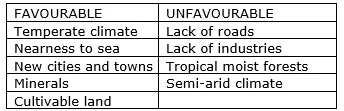
Factors affecting the distribution of population can be classified as favourable and unfavourable based on their impact on human settlement and development. Here's how the factors mentioned in the question can be classified:
Favourable Factors:
- Nearness to sea: Coastal areas provide access to transportation, trade, and fishing, which can be advantageous for human settlement and development.
- Temperate climate: Moderate temperatures and weather conditions can be favourable for agriculture, human settlement, and economic activities.
- Cultivable land: The availability of fertile and cultivable land can attract human settlement and support agriculture-based economies.
- Minerals: Mineral-rich areas can attract mining and other industrial activities, which can generate employment and contribute to economic growth.
- New cities and towns: Newly established settlements may lack basic infrastructure and amenities, which can discourage human settlement and development.
Unfavourable Factors:
- Lack of roads: Inadequate transportation infrastructure can limit accessibility and hinder economic development.
- Lack of industries: A lack of industrial activities and job opportunities can discourage human settlement and contribute to outmigration.
- Tropical moist forests: Dense forests and tropical climates can pose challenges to human settlement, including limited land for cultivation, diseases, and natural hazards.
- Semi-arid climate: Dry and arid regions can pose challenges to agriculture, water availability, and human settlement.
It's important to note that these factors can interact with each other in complex ways, and their impact can vary depending on the specific context and the needs and priorities of the population.

Favourable: nearness to sea, temperate climate, new cities and towns, minerals, cultivable land. Unfavourable: lack of roads, lack of industries, tropical moist forests, semi-arid climate.
| Favourable factors | Unfavourable factors |
|---|---|
| Nearness to sea: trade, ports, fishing and a moderate climate attract people. | Lack of roads: poor transport makes areas hard to reach and develop. |
| Temperate climate: neither too hot nor too cold, comfortable for living and farming. | Lack of industries: few jobs, so people move away. |
| New cities and towns: offer jobs, education, health care and other facilities, so people migrate to them. | Tropical moist forests: dense forest, heavy rain, humidity and diseases make settlement difficult (e.g. the Amazon basin). |
| Minerals: mining and related industries create employment. | Semi-arid climate: low and uncertain rainfall, shortage of water and poor agriculture. |
| Cultivable land: fertile land supports agriculture and food supply (e.g. the Ganga plains). |
Your answer
Log in or create a free account to answer this question.