Skip to content
doubtly
Topic: Flower, fruit and seed· Structural Organisation in Animals and Plants

Identify the type of flowers based on the position of calyx, corolla and androecium with respect to the ovary from the given figures (a) and (b)
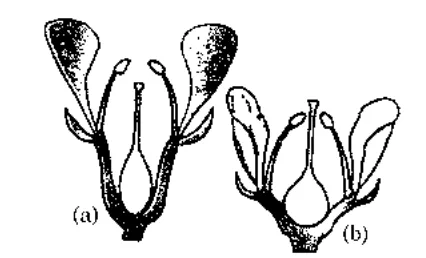
Identify the type of flowers based on the position of calyx, corolla and androecium with respect to the ovary from the given figures (a) and (b)

two flower longitudinal sections (a) and (b) showing ovary position

1. (a) Perigynous; (b) Perigynous

2. (a) Epigynous; (b) Hypogynous

3. (a) Hypogynous; (b) Epigynous

4. (a) Perigynous; (b) Epigynous

1 answer

Best answer

Answer: 1. (a) Perigynous; (b) Perigynous

Key idea: the position of the thalamus and the other whorls decides hypogynous, perigynous or epigynous.

In both figures the ovary sits in the centre of a cup-like thalamus whose rim carries the sepals, petals and stamens, level with the ovary rather than below or above it. This is the perigynous condition, as in rose. In hypogynous flowers the ovary is superior with whorls below it; in epigynous flowers the whorls are above an inferior ovary.

Doubtly AI · 30 Oct 2026 AI-generated · not yet verified Report
Was this answer helpful?

Your answer

Log in or create a free account to answer this question.