
If the half-life (\(t_{1/2}\)) for a first order reaction is 1 minute, then the time required for 99.9% completion of the reaction is closest to :
Integrated rate equations and half-life (zero and first order)
Every question from past board papers on Integrated rate equations and half-life (zero and first order), newest paper first. Open any question for its full worked answer.
NEET UG 2025 question paper (official, booklet 45)
Full paper →-
-
If the rate constant of a reaction is 0.03 \(\mathrm{s^{-1}}\), how much time does it take for 7.2 mol \(\mathrm{L^{-1}}\) concentration of the reactant to get reduced to 0.9 mol \(\mathrm{L^{-1}}\)?
(Given: log 2 = 0.301)
NEET UG 2022 question paper (official, booklet R6)
Full paper →-
The given graph is a representation of kinetics of a reaction.
[Graph: y versus x at constant temperature T]
The \(y\) and \(x\) axes for zero and first order reactions, respectively are
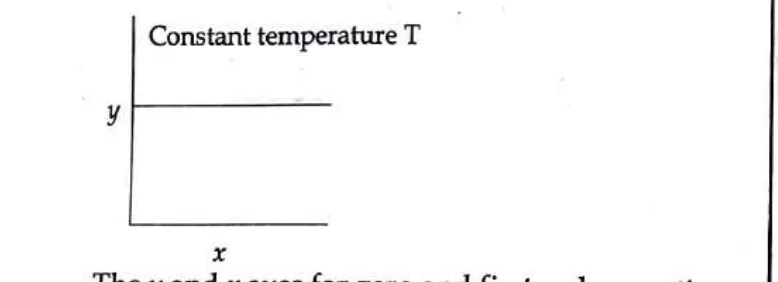
-
For a first order reaction A \(\to\) Products, initial concentration of A is 0.1 M, which becomes 0.001 M after 5 minutes. Rate constant for the reaction in \(min^{-1}\) is
NEET UG 2020 question paper (official, booklet E1)
Full paper →-
The rate constant for a first order reaction is \(4.606\times10^{-3}\) s\(^{-1}\). The time required to reduce 2.0 g of the reactant to 0.2 g is :
NEET UG 2019 question paper (official, booklet P1)
Full paper →-
If the rate constant for a first order reaction is k, the time (t) required for the completion of 99% of the reaction is given by :
NEET UG 2018 question paper (official, booklet EE)
Full paper →-
The correct difference between first- and second-order reactions is that
-
When initial concentration of the reactant is doubled, the half-life period of a zero order reaction
NEET UG 2017 question paper (official, booklet B)
Full paper →-
A first order reaction has a specific reaction rate of \(10^{-2}\ sec^{-1}\). How much time will it take for 20 g of the reactant to reduce to 5 g ?
NEET UG 2016 Phase 1 question paper (official, booklet A)
Full paper →-
The rate of a first-order reaction is \(0.04\ mol\ l^{-1}\ s^{-1}\) at 10 seconds and \(0.03\ mol\ l^{-1}\ s^{-1}\) at 20 seconds after initiation of the reaction. The half-life period of the reaction is :