
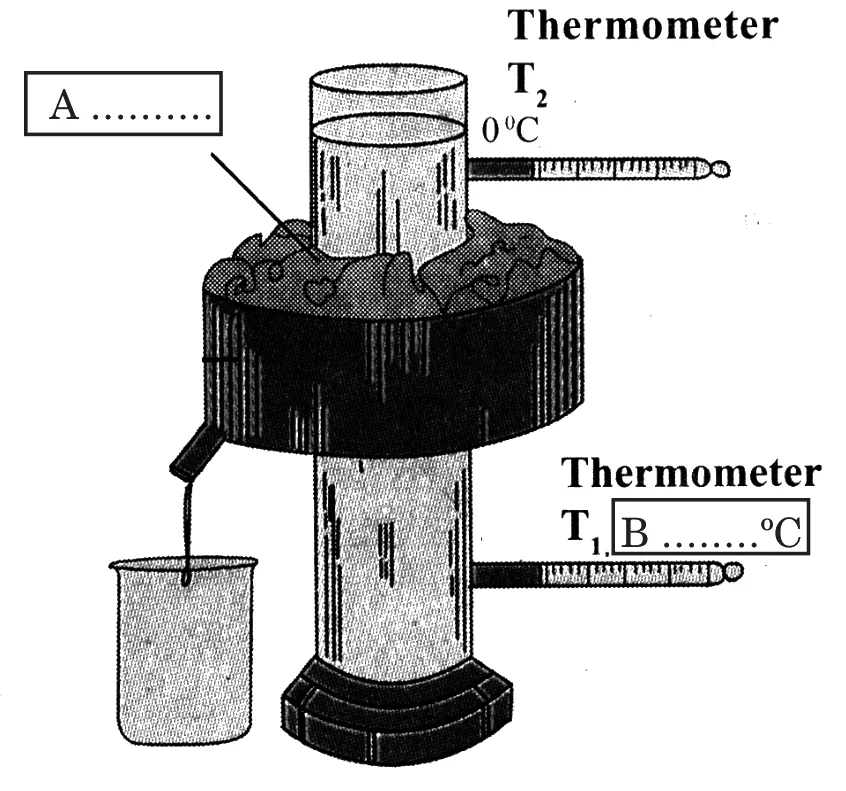
Q.2 (B)(i) Label the following diagram and name the property can be studied using it :
Chapter 5: Heat
Every question from past board papers on Heat, newest paper first. Open any question for its full worked answer.
Q.2 (B)(i) Label the following diagram and name the property can be studied using it :
Q.3 (iv) (a) What is meant by Regelation ?
(b) What is the effect of pressure on melting point of ice ?
(c) Write any one example of regelation.
Q.1 (B)(iii) State whether the following statement is true or false :
‘The volume of water at 4ºC is maximum’.
Q.1 (B)(iv) Match the pairs :
| Group ‘A’ | Group ‘B’ |
|---|---|
| Thermometer | (a) Mechanical energy (b) To measure temperature (c) To measure electric current |
Q.3 (iii) Read the following paragraph and answer the questions :
If heat is exchanged between a hot and cold object, the temperature of the cold object goes on increasing due to gain of energy and temperature of the hot object goes on decreasing due to loss of energy.
The change in temperature continues till the temperatures of both the objects attain the same value. In the process, the cold object gains heat energy and the hot object loses heat energy. If the system of both objects is isolated from environment by keeping it inside a heat resistant box, then no energy can flow from inside the box or come into the box.
(a) Heat is transferred from where to where ?
(b) Which principle do we learn from this process ?
(c) How will you state the principle briefly ?
प्रश्न 1 (ब)(iii) खालील विधान चूक की बरोबर ते सांगा :
पाण्याचे आकारमान 4ºC ला सर्वात जास्त असते.
प्रश्न 1 (ब)(iv) जोड्या जुळवा :
| ‘अ’ गट | ‘ब’ गट |
|---|---|
| थर्मामीटर | (अ) यांत्रिक ऊर्जा (ब) तापमान मोजणे (क) विद्युतधारा मोजणे |
प्रश्न 3 (iii) खालील उताऱ्याचे वाचन करा व विचारलेल्या प्रश्नांची उत्तरे लिहा :
उष्ण व थंड वस्तूंमध्ये उष्णतेची देवाणघेवाण झाल्यास उष्ण वस्तूचे तापमान कमी होत जाते व थंड वस्तूचे तापमान वाढत जाते. जोपर्यंत दोन्ही वस्तूंचे तापमान सारखे होत नाही तोपर्यंत तापमानातील हा बदल होत राहतो. या क्रियेत गरम वस्तू उष्णता गमावतो तर थंड वस्तू उष्णता ग्रहण करते. दोन्ही वस्तू फक्त एकमेकांमध्ये ऊर्जेची देवाणघेवाण करू शकतात. अशा स्थितीत असल्यास म्हणजेच जर दोनही वस्तूंची प्रणाली वातावरणापासून वेगळी केल्यास प्रणालीमधून उष्णता आतही येणार नाही किंवा बाहेरही जाणार नाही.
(अ) उष्णता स्थानांतरण कोठून कोठे होते ?
(ब) अशा स्थितीत आपणास उष्णतेच्या कोणत्या तत्त्वाचा बोध होतो ?
(क) ते तत्त्व थोडक्यात कसे सांगता येईल ?
प्रश्न 2 (ब)(i) खालील आकृतीस नावे देवून या उपकरणाच्या साहाय्याने कोणत्या गुणधर्माचा अभ्यास करता येतो ?
(आकृती: पाण्याने भरलेले एक उंच दंडगोलाकार भांडे; त्याच्या मधल्या भागाभोवती एक पसरट पात्र असून त्यात भरलेल्या पदार्थाकडे “A ..........” असा निर्देश आहे; पात्राच्या नळीतून पाणी खालच्या बीकरमध्ये गळत आहे. भांड्याच्या वरच्या भागात तापमापी \(T_2\) असून ते 0 °C दाखवते; खालच्या भागात तापमापी \(T_1\) असून त्याचे वाचन “B ........°C” असे दाखवले आहे.)
प्रश्न 3 (iv) (अ) पुनर्हिमायन म्हणजे काय ?
(ब) दाबामुळे बर्फाच्या द्रवाणांकावर काय परिणाम होतो ?
(क) पुनर्हिमायनाचे एक उदाहरण लिहा.
Q.1 (B)(v) Name the behaviour of water between its temperature from 0ºC to 4ºC.
Q.2 (B)(i) Name and state the principle used to measure the specific heat capacity of a substance.
Q.2 (B)(iv) Define specific heat of an object. Write its SI and CGS units.
Q.3 (v) How much heat energy is necessary to raise the temperature of 5 kg of water from 20ºC to 100ºC ?
[c = 1 kcal/kgºC]
प्रश्न 1 (ब)(v) 0 ºC ते 4 ºC या तापमानादरम्यान असणाऱ्या पाण्याच्या आचरणास काय म्हणतात ?
प्रश्न 2 (ब)(i) पदार्थाच्या विशिष्ट उष्माधारकतेच्या मापनासाठी कोणत्या तत्त्वाचा वापर करतात ? ते तत्त्व लिहा.
प्रश्न 2 (ब)(iv) विशिष्ट उष्माधारकतेची व्याख्या लिहून त्याचे SI एकक व CGS एकक लिहा.
प्रश्न 3 (v) 5 kg वस्तुमान असलेल्या पाण्याचे तापमान 20°C पासून 100°C पर्यंत वाढविण्यासाठी किती उष्णता लागेल ?
[c = 1 kcal/kg°C]
Q.2 (B)(ii) Observe the figure and answer the questions given below.
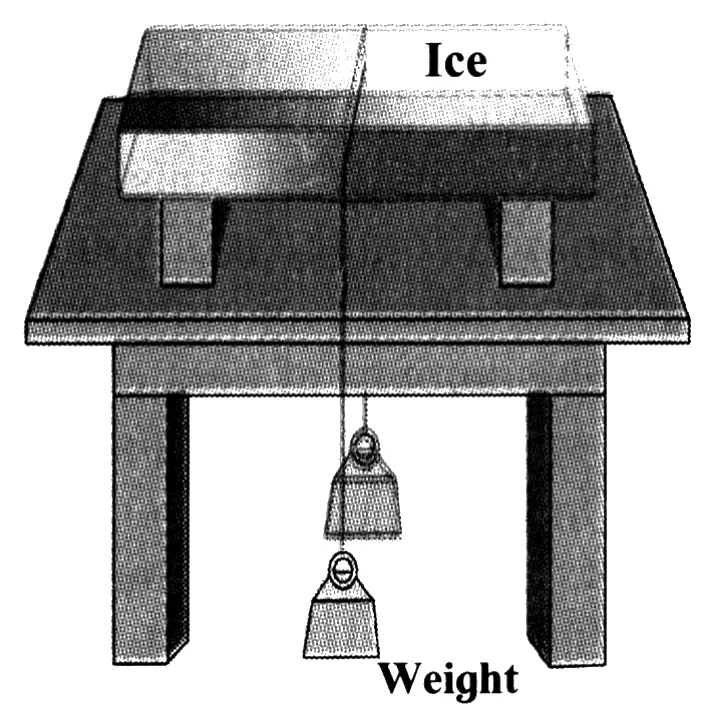
(a) Name the phenomenon shown in the figure.
(b) Define the above phenomenon.
Q.3 (viii) (a) What is meant by anomalous behaviour of water ?
(b) Explain the role of anomalous behaviour of water in preserving aquatic life in cold climate.
Q.1 (A)(i) The SI unit of heat is ..................................
Q.1 (B)(iii) Write the use of ‘Calorimeter’.
Q.3 (iii) Observe the following graph and answer the following questions :
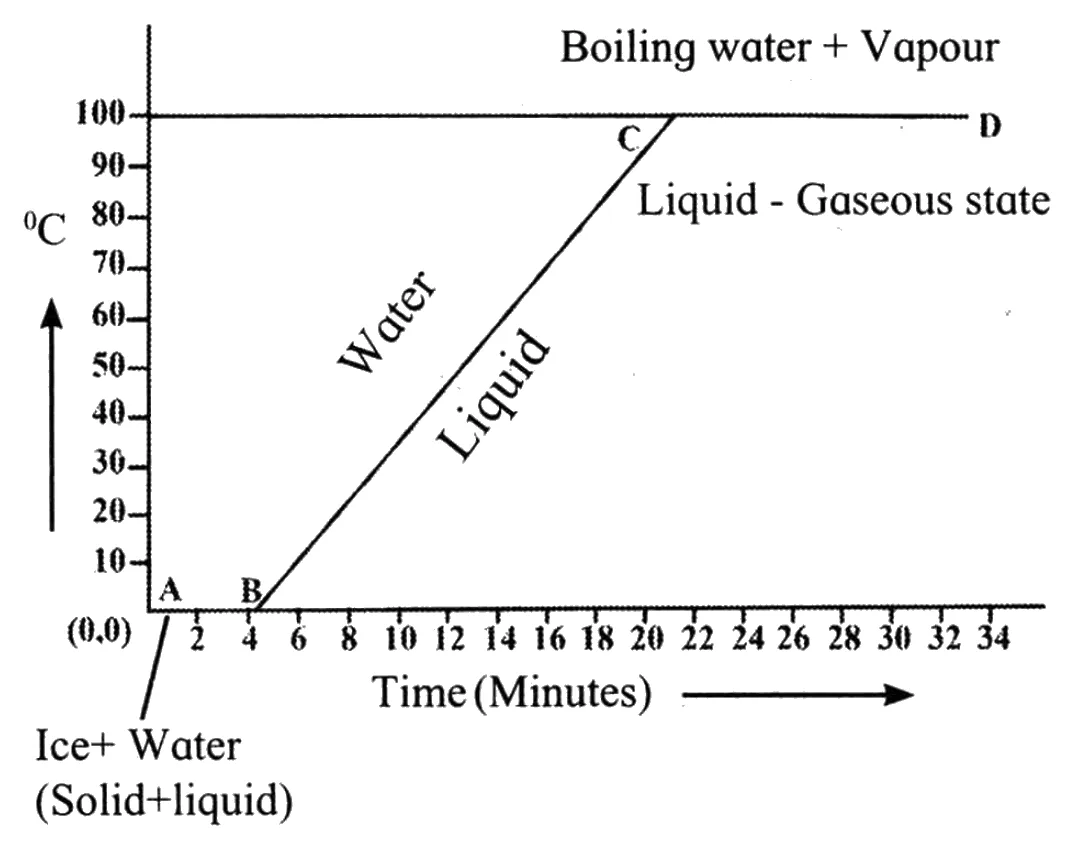
(a) What does the graph represent ?
(b) What does the line AB represent ?
(c) What does the line BC represent ?
प्रश्न 1 (अ)(i) उष्णतेचे SI पद्धतीतील एकक .................... हे आहे.
प्रश्न 1 (ब)(iii) कॅलरीमापीचा उपयोग लिहा.
प्रश्न 3 (iii) खालील आलेखाचे निरीक्षण करा आणि विचारलेल्या प्रश्नांची उत्तरे लिहा :
(आलेख: उभ्या अक्षावर तापमान °C (0 ते 100) आणि आडव्या अक्षावर काल (मिनिटे, 0 ते 34). A (0, 0) पासून B (सुमारे 4 मिनिटे) पर्यंत रेषा 0 °C वर आडवी असून तेथे ‘बर्फ + पाणी (स्थायु + द्रव)’ असे लिहिले आहे. B पासून C (100 °C, सुमारे 22 मिनिटे) पर्यंत रेषा सरळ वर जाते, तिच्यावर ‘पाणी द्रव’ असे लिहिले आहे. C पासून D पर्यंत रेषा 100 °C वर आडवी असून तेथे ‘उकळते पाणी + वाफ’ व ‘द्रव – वायु अवस्था’ असे लिहिले आहे.)
(a) दिलेला आलेख काय दर्शवतो ?
(b) रेषा AB काय दर्शवते ?
(c) रेषा BC काय दर्शवते ?
प्रश्न 2 (ब)(ii) आकृतीचे निरीक्षण करून खालील प्रश्नांची उत्तरे लिहा :
(आकृती: टेबलावरील दोन लाकडी ठोकळ्यांवर बर्फाची लादी ठेवलेली आहे. बर्फाच्या लादीवरून एक बारीक तार नेलेली असून त्या तारेला टेबलाखाली एकाखाली एक अशी दोन वजने टांगलेली आहेत; तार बर्फातून खाली सरकते. आकृतीत ‘बर्फ’ व ‘वजन’ अशी नावे दिली आहेत.)
(अ) आकृतीत दाखविलेल्या प्रक्रियेचे नाव लिहा.
(ब) त्या प्रक्रियेची व्याख्या लिहा.
प्रश्न 3 (viii) (a) पाण्याचे असंगत आचरण म्हणजे काय ?
(b) थंड प्रदेशात जलीय वनस्पती व जलचर यांना जिवंत ठेवण्यात पाण्याच्या असंगत आचरणाची भूमिका स्पष्ट करा.