
Q.1 (A)(i) ..................... is the functional group of carboxylic acid.
Science & Technology Part 1
science maharashtra board 10th
Every question from past board papers on Science & Technology Part 1, newest paper first. Open any question for its full worked answer.
Maharashtra SSC Science and Technology Part 1 Board Paper June 2026
Full paper →-
-
Q.1 (A)(ii) The force acting on any object moving along a circle and directed towards the centre of the circle is called as ................................
-
Q.1 (A)(iii) When electric current is passed through acidulated water ................... of water takes place.
-
Q.1 (A)(iv) In India the frequency of alternating current (AC) is ......................
-
Q.1 (A)(v) The angle between the surface of a glass slab and incident ray is 30º. The angle of incidence is ........................
-
Q.1 (B)(i) Find odd one out :
Voltmeter, Ammeter, Galvanometer, Thermometer. -
Q.1 (B)(ii) Complete the following chart :
Element Electronic Configuration Group Number Na (2, 8, 1) Group – 1 Al (2, 8, 3) .............. -
Q.1 (B)(iii) State whether true or false :
The weight of an object is constant everywhere. -
Q.1 (B)(iv) Complete the co-relation :
Cooking of food : Chemical change :: Evaporation of water : ............... -
Q.1 (B)(v) Identify the hydrocarbon from the given structural formula :
[Structural formula: H–C–C–H, with one H above and one H below each of the two carbon atoms.]
-
Q.2 (A)(i) Give scientific reasons : Stars appear to be higher in the sky as compared to its actual position.
-
Q.2 (A)(ii) Give scientific reasons : Elements belonging to the same group have the same valency.
-
Q.2 (A)(iii) Give scientific reasons : Geostationary satellites are not useful for studies of polar regions.
-
Q.2 (B)(i) Label the following diagram and name the property can be studied using it :
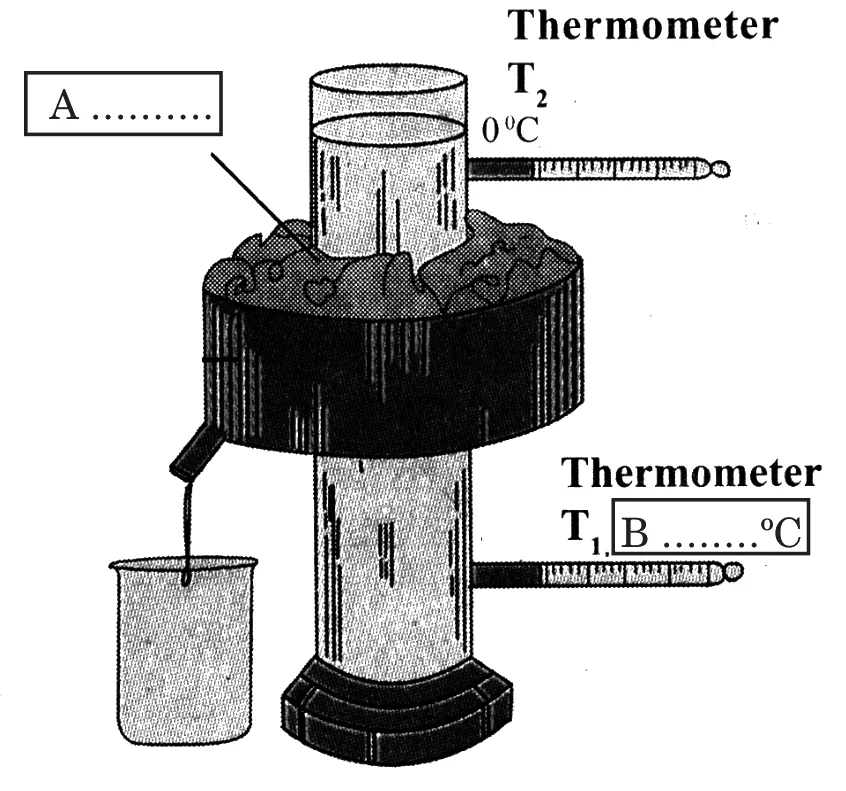
-
Q.2 (B)(ii) The focal length of a convex lens is 40 cm. What is its power ?
-
Q.2 (B)(iii) (a) Write the chemical formula of acetic acid.
(b) Write any one use of vinegar. -
Q.2 (B)(iv) State the laws :
(a) Right hand thumb rule.
(b) Fleming’s left hand rule. -
Q.2 (B)(v) Define :
(a) Ores
(b) Gangue. -
Q.3 (i) State Kepler’s three laws.
-
Q.3 (ii) An electric tungsten bulb is connected into a home circuit. The home electric supply runs at 220 V potential difference. When switch on, a current of 0.45 A flows through the bulb :
(a) What must be power (wattage) of the bulb ?
(b) If it is kept on for 10 hours, how many units of electricity will be consumed ? -
Q.3 (iii) State the factors affecting the rate of chemical reaction. Explain any one of it.
-
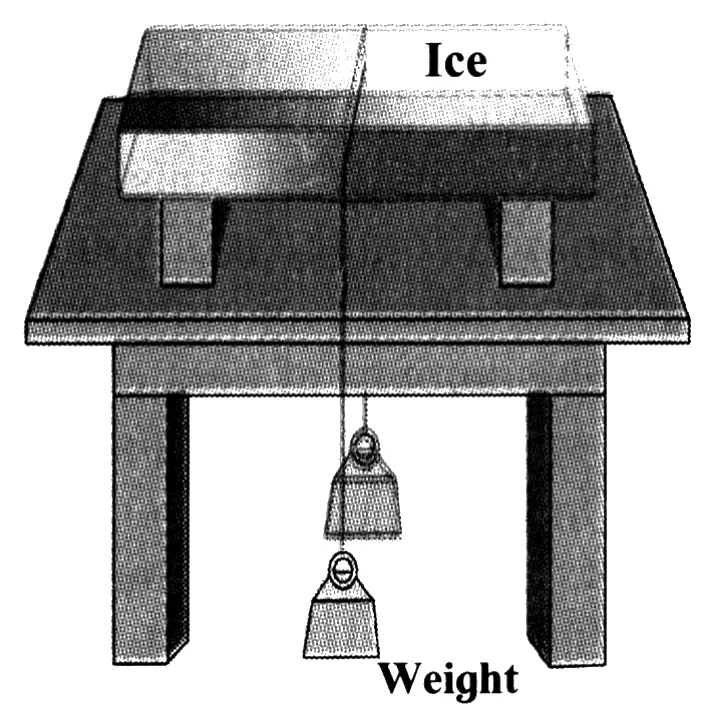
Q.3 (iv) (a) What is meant by Regelation ?
(b) What is the effect of pressure on melting point of ice ?
(c) Write any one example of regelation. -
Q.3 (v) Complete the following table :
S.No. Polymer Name of the monomer Occurrence 1 Polysaccharide Glucose Starch 2. Cellulose ........... Wood (cell walls of plant cells) 3. Proteins α amino acids ................... 4. ............ Nucleotide (deoxyribose phosphate) ................... 5. R.N.A. ............. Nucleus and cytoplasm of cell 6. Rubber Isoprene CH2=C–CH=CH2 (with CH3) ................. -
Q.3 (vi) Read the following passage and answer the questions given below :
Space Debris and its management
In addition to the artificial satellite, some other objects are also revolving around the earth. It includes, non-functional satellites, parts of the launcher detached during launching and debris generated due to collision of satellite with other satellite or any other object in the space. According to one estimation mode in 2016, there are about 2 crore pieces of length more than 1 cm, revolving around the earth! All this is nothing but the debris in space.
This debris can be harmful to the artificial satellites. It can collide with these satellites or spacecrafts and damage them. This debris is increasing day by day. Soon, it will be difficult to launch new spacecrafts. It is, therefore, very essential to manage the debris. Some studies and experiments are being done with this in view.
(a) What is meant by space debris ?
(b) How it can be harmful to the artificial satellites ?
(c) What efforts are being taken to manage it ? -
Q.3 (vii) Observe the following diagrams and state the rules of refraction of light in different media using it.
[Three diagrams: (a) a ray passing from a rarer medium (air) into a denser medium (glass) and bending towards the normal; (b) a ray passing from a denser medium into a rarer medium and bending away from the normal; (c) a ray falling normally on the surface between a rarer and a denser medium and going straight on.]
-
Q.3 (viii) Write demerits of Mendeleev’s periodic table.
-
Q.4 (i) Observe the figure and answer the questions :
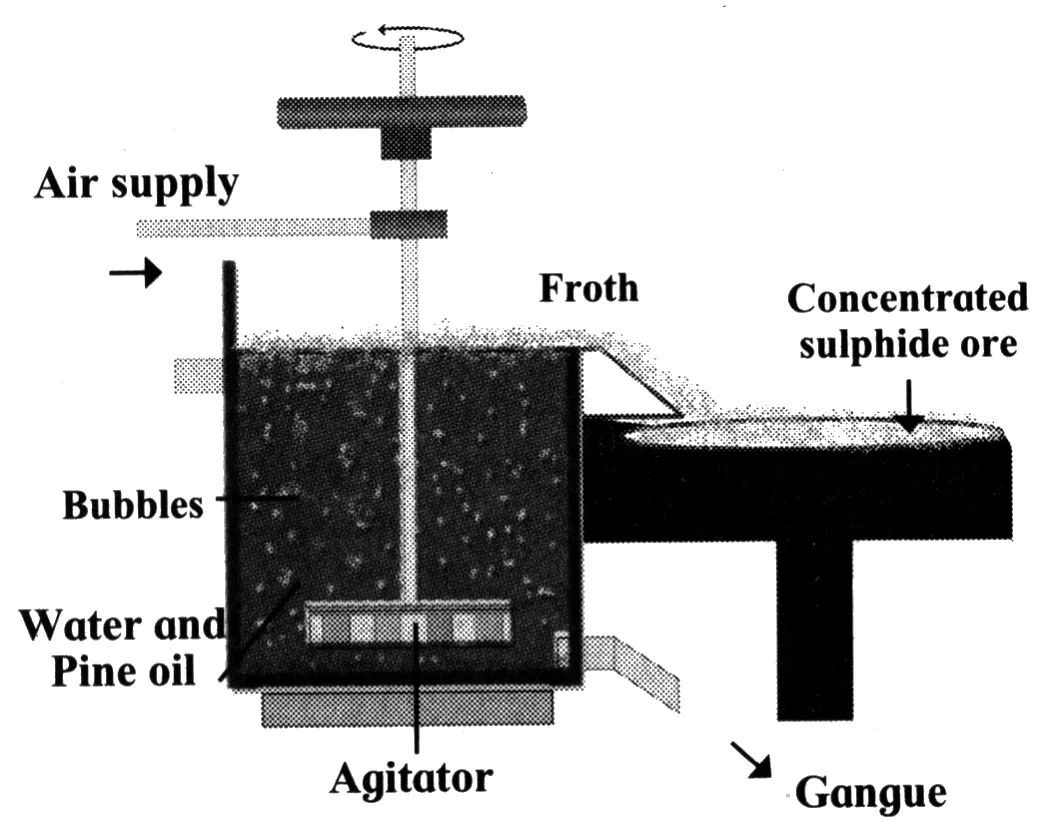
(a) Name the method shown in the above figure.
(b) For what purpose the above method is used ?
(c) Write two properties which are used in the method.
(d) What is the use of agitator ?
(e) Name any one ore which is concentrated by this method. -
Q.4 (ii) Observe the following figure and answer the questions given below :
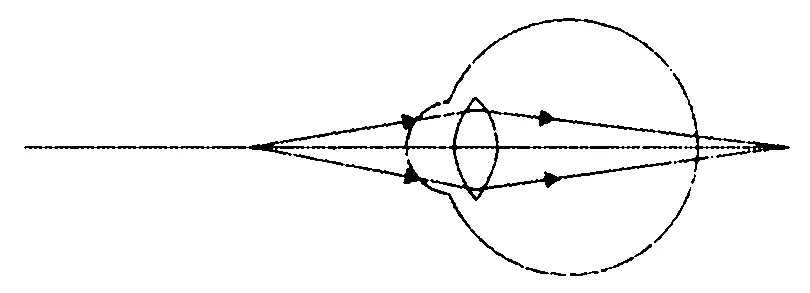
(a) Name the defect of vision represented in the above figure. 1
(b) State the reasons for this defect. 1
(c) How is it corrected ? 1
(d) Draw the diagram to show the correction of this defect. 2
Maharashtra SSC Science and Technology Part 1 Board Paper March 2026
Full paper →-
Q.1 (A)(i) The value of escape velocity of a body from the earth’s surface is Vesc = ...................... .
-
Q.1 (A)(ii) In ................................... of the modern periodic table, are the non-metals found.
-
Q.1 (A)(iii) The resistance of the wire is 100 Ω. If it is carrying a current of 1 A for 10 seconds, the heat produced will be ........................ .
-
Q.1 (A)(iv) The refractive index of diamond is ........................ .
-
Q.1 (A)(v) For normal human eye, the minimum distance of distinct vision is ........................ .
-
Q.1 (B)(i) Find odd man out :
Cooking of food, Ripening of fruit, Milk turned into curd, Transformation of ice into water. -
Q.1 (B)(ii) By observing the correlation in the first pair, complete the second pair :
Mass : Kilogram : : Weight : ................... -
Q.1 (B)(iii) State whether the following statement is true or false :
‘The volume of water at 4ºC is maximum’. -
Q.1 (B)(iv) Match the pairs :
Group ‘A’ Group ‘B’ Thermometer (a) Mechanical energy
(b) To measure temperature
(c) To measure electric current -
Q.1 (B)(v) What is the wavelength of violet ray in dispersion of light ?
-
Q.2 (A)(i) Give scientific reasons : The geostationary satellites are not useful for studies of polar regions.
-
Q.2 (A)(ii) Give scientific reasons : The hydrogenation of vegetable oil in presence of nickel catalyst forms Vanaspati-ghee.
-
Q.2 (A)(iii) Give scientific reasons : Atomic radius goes on increasing down the ‘group’.
-
Q.2 (B)(i) What is meant by an ‘alloy’ ? Give two examples.
-
Q.2 (B)(ii) Distinguish between oxidation and reduction.
-
Q.2 (B)(iii) Give the molecular formula and structural formula of Benzene.
-
Q.2 (B)(iv) An electric tungsten bulb is connected into a home circuit. The home electric supply runs at 220 volt potential difference. When switched on, a current of 0.45 A flows through the bulb. What must be the power (wattage) of the bulb ? If it is kept ‘on’ for 10 hours, how many units of electricity will be consumed ?
-
Q.2 (B)(v) ‘A rainbow is the combined effect of refraction, dispersion and total internal reflection of light’. Explain the sentence.
-
Q.3 (i) How much time a satellite in an orbit at height 35780 km above earth’s surface would take, if the mass of the earth would have been four times its original mass ?
-
Q.3 (ii) Observe the figure and answer the following questions :
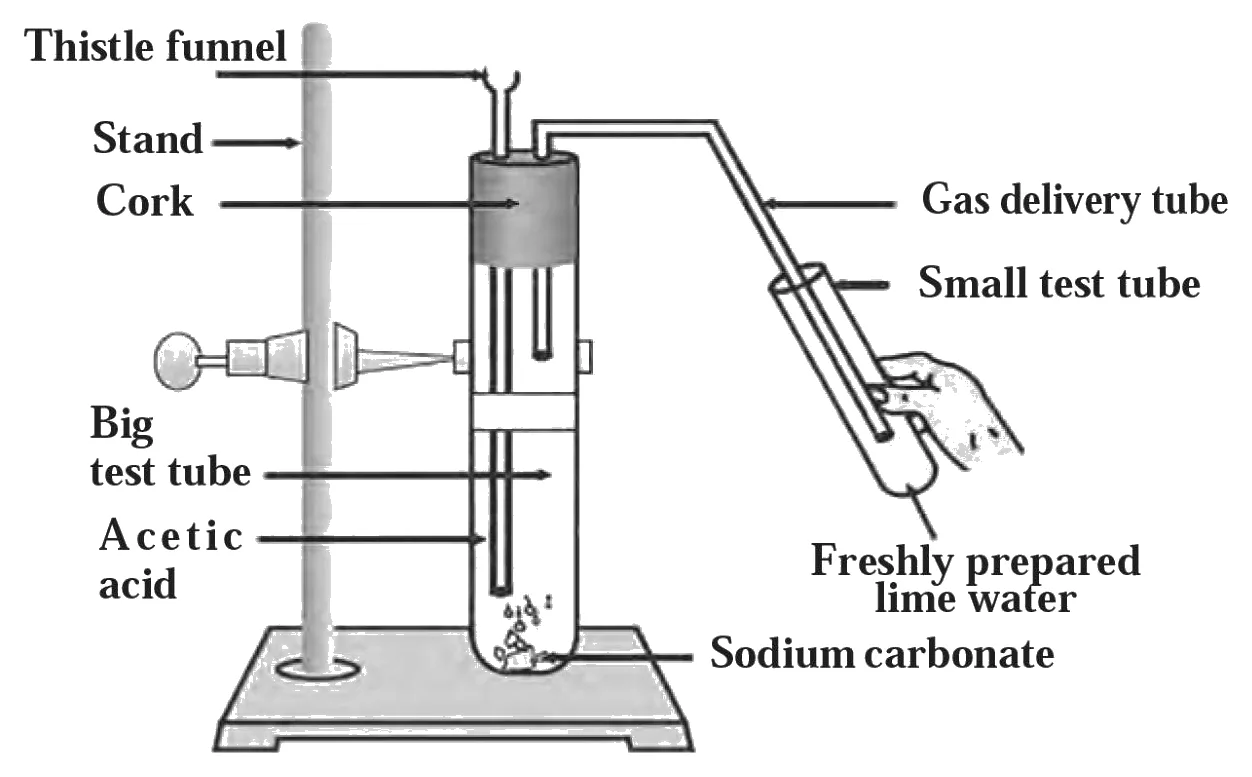
(a) Which gas is released out as effervescence in the big test tube ?
(b) What is the colour change in the lime water ?
(c) Write the related chemical equation. -
Q.3 (iii) Read the following paragraph and answer the questions :
If heat is exchanged between a hot and cold object, the temperature of the cold object goes on increasing due to gain of energy and temperature of the hot object goes on decreasing due to loss of energy.
The change in temperature continues till the temperatures of both the objects attain the same value. In the process, the cold object gains heat energy and the hot object loses heat energy. If the system of both objects is isolated from environment by keeping it inside a heat resistant box, then no energy can flow from inside the box or come into the box.
(a) Heat is transferred from where to where ?
(b) Which principle do we learn from this process ?
(c) How will you state the principle briefly ? -
Q.3 (iv) Draw a neat labelled diagram of electric motor and write its principle.
-
Q.3 (v) \(\mathrm{2NaOH + H_2SO_4 \rightarrow Na_2SO_4 + H_2O}\)
State whether above chemical reaction is balanced or not. From the number of atoms present in the reactants and products, fill in the blanks :Elements Reactants (Left Side)
No. of atomsProducts (Right Side)
No. of atomsNa ................ 2 O ................ ................ H ................ ................ S 1 ................ -
Q.3 (vi) Write the names from the description :
(a) The metalloids in the second and third period.
(b) Non-metals in the third period.
(c) Two elements having valency 4. -
Q.3 (vii) Study the entries in the following table and rewrite them by putting the connected items in the single row :
I II III (a) Weight m/s2 zero at the centre (b) Acceleration due to gravity Nm2/kg2 Same in the entire universe (c) Gravitational constant N Changes from place to place -
Q.3 (viii) What is meant by ‘mirage’ ? In which condition mirage is seen ? Give such one more example.
-
Q.4 (i) (a) Draw a diagram of ‘image formed by concave lens’. 2
(b) State the nature of image formed by concave lens. 1
(c) If the focal length of a concave lens is 25 cm, find the power of the lens. 2 -
Q.4 (ii) (a) Write the main steps in the extraction of aluminium. 1
(b) What is the melting point of alumina and how is the melting point reduced ? 2
(c) Why anodes need to be replaced from time to time during the electrolysis of alumina ? 2
Maharashtra SSC Science and Technology Part 1 Board Paper March 2026, Marathi Medium (विज्ञान आणि तंत्रज्ञान भाग १ मार्च 2026)
Full paper →-
प्रश्न 1 (अ)(i) वस्तूचा पृथ्वीवरील मुक्तिवेग Vesc = ...................... .
-
प्रश्न 1 (अ)(ii) आधुनिक आवर्तसारणीत अधातू ...................... खंडात आहेत.
-
प्रश्न 1 (अ)(iii) एका तारेचा रोध 100 Ω आहे. त्या तारेतून 1 A विद्युतधारा 10 सेकंद प्रवाहीत केल्यास निर्माण झालेली उष्णता ...................... असेल.
-
प्रश्न 1 (अ)(iv) हिऱ्याचा अपवर्तनांक ...................... आहे.
-
प्रश्न 1 (अ)(v) निरोगी मानवी डोळ्याचे सुस्पष्ट दृष्टीचे लघुत्तम अंतर ...................... आहे.
-
प्रश्न 1 (ब)(i) गटात न बसणारे घटक लिहा :
अन्न शिजणे, फळ परिपक्व होणे, दुधाचे दह्यात रूपांतर होणे, बर्फाचे पाण्यात रूपांतर होणे. -
प्रश्न 1 (ब)(ii) पहिला सहसंबंध विचारात घेऊन दुसरा सहसंबंध पूर्ण करा :
वस्तुमान : किलोग्रॅम : : वजन : ................... -
प्रश्न 1 (ब)(iii) खालील विधान चूक की बरोबर ते सांगा :
पाण्याचे आकारमान 4ºC ला सर्वात जास्त असते. -
प्रश्न 1 (ब)(iv) जोड्या जुळवा :
‘अ’ गट ‘ब’ गट थर्मामीटर (अ) यांत्रिक ऊर्जा
(ब) तापमान मोजणे
(क) विद्युतधारा मोजणे -
प्रश्न 1 (ब)(v) प्रकाशाच्या अपस्करणात जांभळ्या किरणांची तरंगलांबी किती असते ?
-
प्रश्न 2 (अ)(i) ध्रुवीय प्रदेशाच्या अभ्यासासाठी भू-स्थिर उपग्रह उपयोगी पडत नाही.
-
प्रश्न 2 (अ)(ii) वनस्पतीजन्य तेलापासून वनस्पती तूप बनविताना निकेल हा उत्प्रेरक वापरतात.
-
प्रश्न 2 (अ)(iii) गणामध्ये वरून खाली जाताना अणुत्रिज्या वाढत जाते.
-
प्रश्न 2 (ब)(i) संमिश्रे म्हणजे काय ? त्यांची दोन उदाहरणे द्या.
-
प्रश्न 2 (ब)(ii) फरक स्पष्ट करा :
ऑक्सिडीकरण आणि क्षपण. -
प्रश्न 2 (ब)(iii) बेन्झिनचे रेणुसूत्र लिहा व रचनासूत्र काढा.
-
प्रश्न 2 (ब)(iv) विजेचा एक टंगस्टन दिवा घरी परिपथात बसविला आहे. घरगुती विद्युतपुरवठा 220 V इतक्या विद्युतविभवांतरावर चालतो. चालू केल्यावर जर 0.45 A इतकी विद्युतधारा दिव्यातून वाहात असेल तर दिवा किती W विद्युतशक्तीचा असला पाहिजे ? हा दिवा 10 तास चालू ठेवला तर किती युनिट वीज खर्च होईल ?
-
प्रश्न 2 (ब)(v) इंद्रधनुष्य हे प्रकाशाचे अपस्करण, अपवर्तन आणि आंतरिक परावर्तन ह्या तीनही नैसर्गिक घटनांचे एकत्रीकरण आहे. हे विधान स्पष्ट करा.
-
प्रश्न 3 (i) पृथ्वीचे वस्तुमान तिचे आहे त्या वस्तुमानापेक्षा चार पट असते तर 35780 किमी. उंच कक्षेत फिरणाऱ्या उपग्रहाला पृथ्वीभोवती 1 प्रदक्षिणा करण्यास किती कालावधी लागला असता ?
-
प्रश्न 3 (ii) खालील आकृतीचे निरीक्षण करून खालील प्रश्नांची उत्तरे लिहा :
(आकृती: स्टँडला लावलेली मोठी परीक्षानळी; तिच्या तोंडाला बूच आहे. बुचातून एक थिसल नरसाळे परीक्षानळीच्या तळाशी ठेवलेल्या सोडिअम कार्बोनेटपर्यंत गेले आहे आणि त्यातून ॲसेटिक ॲसिड ओतले आहे; तळाशी बुडबुडे दिसत आहेत. बुचातून निघालेली वायुवाहक नलिका हातात धरलेल्या लहान परीक्षानळीतील ताज्या चुन्याच्या निवळीत बुडवली आहे.)
(अ) मोठ्या परीक्षानळीत फसफसून येणारा वायू कोणता आहे ?
(ब) चुन्याच्या निवळीच्या रंगात काय बदल होतो ?
(क) संबंधित रासायनिक समीकरण लिहा. -
प्रश्न 3 (iii) खालील उताऱ्याचे वाचन करा व विचारलेल्या प्रश्नांची उत्तरे लिहा :
उष्ण व थंड वस्तूंमध्ये उष्णतेची देवाणघेवाण झाल्यास उष्ण वस्तूचे तापमान कमी होत जाते व थंड वस्तूचे तापमान वाढत जाते. जोपर्यंत दोन्ही वस्तूंचे तापमान सारखे होत नाही तोपर्यंत तापमानातील हा बदल होत राहतो. या क्रियेत गरम वस्तू उष्णता गमावतो तर थंड वस्तू उष्णता ग्रहण करते. दोन्ही वस्तू फक्त एकमेकांमध्ये ऊर्जेची देवाणघेवाण करू शकतात. अशा स्थितीत असल्यास म्हणजेच जर दोनही वस्तूंची प्रणाली वातावरणापासून वेगळी केल्यास प्रणालीमधून उष्णता आतही येणार नाही किंवा बाहेरही जाणार नाही.
(अ) उष्णता स्थानांतरण कोठून कोठे होते ?
(ब) अशा स्थितीत आपणास उष्णतेच्या कोणत्या तत्त्वाचा बोध होतो ?
(क) ते तत्त्व थोडक्यात कसे सांगता येईल ? -
प्रश्न 3 (iv) विद्युतचलित्राची सुबक नामनिर्देशित आकृती काढून तत्त्व लिहा.
-
प्रश्न 3 (v) \(\mathrm{2NaOH + H_2SO_4 \longrightarrow Na_2SO_4 + H_2O}\)
या रासायनिक समीकरणातील अभिक्रियाकारके व उत्पादिते यातील मूलद्रव्यांच्या अणुसंख्येवरून समीकरण संतुलित आहे किंवा नाही हे सांगून खालील सारणी पूर्ण करा :
मूलद्रव्य अभिक्रियाकारके
(डावी बाजू)
अणुसंख्याउत्पादिते
(उजवी बाजू)
अणुसंख्याNa ................ 2 O ................ ................ H ................ ................ S 1 ................ -
प्रश्न 3 (vi) दिलेल्या वर्णनावरून मूलद्रव्यांची नावे लिहा :
(अ) दुसऱ्या व तिसऱ्या आवर्तांमधील धातुसदृश
(ब) तिसऱ्या आवर्तामधील अधातू
(क) संयुजा 4 असलेली दोन मूलद्रव्ये. -
प्रश्न 3 (vii) खालील तक्त्यातील तीनही स्तंभातील नोंदीमधील संबंध लक्षात घेऊन त्याप्रमाणे तक्ता परत लिहा :
I II III (अ) वजन m/s2 केंद्राजवळ शून्य (ब) गुरुत्व त्वरण Nm2/kg2 संपूर्ण विश्वात सारखे (क) गुरुत्व स्थिरांक N ठिकाण परत्वे बदलते -
प्रश्न 3 (viii) मृगजळ म्हणजे काय ? कोणत्या परिस्थितीत मृगजळ दिसते ? तसेच अशाच प्रकारचे एक उदाहरण लिहा.
-
प्रश्न 4 (i) (अ) अंतर्वक्र भिंगाद्वारे मिळणारी पदार्थाची प्रतिमा दर्शवणारी आकृती काढा व नावे द्या. 2
(ब) अंतर्वक्र भिंगाद्वारे मिळणाऱ्या प्रतिमेचे स्वरूप लिहा. 1
(क) एका अंतर्वक्र भिंगाचे नाभीय अंतर 25 सेमी आहे. त्यावरून भिंगाची शक्ती काढा. 2 -
प्रश्न 4 (ii) (अ) ॲल्युमिनिअमच्या निष्कर्षणातील मुख्य पायऱ्या स्पष्ट करा. 1
(ब) ॲल्युमिनाचा विलयबिंदू किती आहे ? तो कमी करण्यासाठी काय करतात ? 2
(क) ॲल्युमिनाचे विद्युत अपघटन होताना धनाग्रे वेळोवेळी का बदलावी लागतात ? 2
Maharashtra SSC Science and Technology Part 1 Board Paper June 2026, Marathi Medium (विज्ञान आणि तंत्रज्ञान भाग १ जून 2026)
Full paper →-
प्रश्न 1 (अ)(i) ................ हा कार्बोक्झिलिक आम्लाचा क्रियात्मक गट आहे.
-
प्रश्न 1 (अ)(ii) वर्तुळाकार कक्षेत फिरणाऱ्या कोणत्याही वस्तूवर वर्तुळाच्या केंद्राच्या दिशेने प्रयुक्त होणाऱ्या बलास ..................... असे म्हणतात.
-
प्रश्न 1 (अ)(iii) आम्लयुक्त पाण्यातून विद्युतप्रवाह जाऊ दिल्यास तर पाण्याचे ........................ होते.
-
प्रश्न 1 (अ)(iv) भारतात प्रत्यावर्ती विद्युतधारेची (AC) वारंवारता ........................ आहे.
-
प्रश्न 1 (अ)(v) काचेच्या लादीचा पृष्ठभाग आणि आपाती किरण यांच्यामधील कोनाचे माप 30º आहे. तर आपाती कोनाचे माप ...................... असेल.
-
प्रश्न 1 (ब)(i) वेगळा घटक ओळखा :
व्होल्टमीटर, ॲमीटर, गॅल्व्हॅनोमीटर, तापमापी. -
प्रश्न 1 (ब)(ii) खालील तक्ता पूर्ण करा :
मूलद्रव्य इलेक्ट्रॉन संरूपण गण क्रमांक Na (2, 8, 1) गण–1 Al (2, 8, 3) ............. -
प्रश्न 1 (ब)(iii) चूक की बरोबर ते लिहा :
वस्तूचे वजन सर्वत्र समान असते. -
प्रश्न 1 (ब)(iv) सहसंबंध पूर्ण करा :
अन्न शिजणे : रासायनिक बदल :: पाण्याचे बाष्पीभवन : ................. -
प्रश्न 1 (ब)(v) खाली दिलेल्या रचनासूत्रावरून हायड्रोकार्बन ओळखा :
(आकृती: रचनासूत्र H–C–C–H; दोन कार्बन अणू एकेरी बंधाने जोडलेले असून प्रत्येक कार्बनच्या वर एक H व खाली एक H आहे.)
-
प्रश्न 2 (अ)(i) तारे आहे त्या स्थितीपेक्षा थोड्या उंचीवर असल्याचे भासतात.
-
प्रश्न 2 (अ)(ii) एकाच गणातील मूलद्रव्यांची संयुजा समान असते.
-
प्रश्न 2 (अ)(iii) ध्रुवीय प्रदेशाच्या अभ्यासासाठी भूस्थिर उपग्रह उपयोगी पडत नाहीत.
-
प्रश्न 2 (ब)(i) खालील आकृतीस नावे देवून या उपकरणाच्या साहाय्याने कोणत्या गुणधर्माचा अभ्यास करता येतो ?
(आकृती: पाण्याने भरलेले एक उंच दंडगोलाकार भांडे; त्याच्या मधल्या भागाभोवती एक पसरट पात्र असून त्यात भरलेल्या पदार्थाकडे “A ..........” असा निर्देश आहे; पात्राच्या नळीतून पाणी खालच्या बीकरमध्ये गळत आहे. भांड्याच्या वरच्या भागात तापमापी \(T_2\) असून ते 0 °C दाखवते; खालच्या भागात तापमापी \(T_1\) असून त्याचे वाचन “B ........°C” असे दाखवले आहे.)
-
प्रश्न 2 (ब)(ii) एका बहिर्गोल भिंगाचे नाभीय अंतर 40 cm आहे, तर त्या भिंगाची शक्ती किती असेल ?
-
प्रश्न 2 (ब)(iii) (अ) ॲसेटिक ॲसिडचे रासायनिक सूत्र लिहा.
(ब) व्हिनेगरचा कोणताही एक उपयोग लिहा. -
प्रश्न 2 (ब)(iv) नियम लिहा.
(अ) उजव्या हाताच्या अंगठ्याचा नियम (ब) फ्लेमिंगच्या डाव्या हाताचा नियम. -
प्रश्न 2 (ब)(v) व्याख्या लिहा :
(अ) धातूके (ब) मृदा अशुद्धी -
प्रश्न 3 (i) केप्लरचे तीन नियम लिहा :
-
प्रश्न 3 (ii) विजेचा एक टंगस्टन दिवा घरी परिपथात बसविलेला आहे. घरगुती विद्युतपुरवठा 220 V इतक्या विद्युत–विभवांतरावर चालतो. चालू केल्यावर जर 0.45 A इतकी विद्युतधारा दिव्यातून वाहात असेल, तर :
(अ) दिवा किती W विद्युतशक्तीचा असला पाहिजे ?
(ब) हा दिवा 10 तास चालू ठेवला तर किती युनिट वीज खर्च होईल ? -
प्रश्न 3 (iii) रासायनिक अभिक्रियेच्या दरावर परिणाम करणारे घटक लिहून कोणत्याही एका घटकाचे स्पष्टीकरण लिहा.
-
प्रश्न 3 (iv) (अ) पुनर्हिमायन म्हणजे काय ?
(ब) दाबामुळे बर्फाच्या द्रवाणांकावर काय परिणाम होतो ?
(क) पुनर्हिमायनाचे एक उदाहरण लिहा. -
प्रश्न 3 (v) खालील तक्ता पूर्ण करा :
अ.क्र. बहुवारिक एकवारिकाचे नाव आढळ 1 पॉलिसॅकराइड ग्लूकोज स्टार्च 2 सेल्युलोज ........ लाकूड (वनस्पती पेशीभित्तिका) 3 प्रथिने अल्फा अमिनो ॲसिड ........ 4 ......... न्यूक्लिओटाइड (डिऑक्सीरायबोज फॉस्फेट) ......... 5 आर.एन.ए. ........... पेशीतील केंद्रक व पेशीद्रव 6 रबर आयसोप्रिन
\(\mathrm{CH_2{=}C(CH_3){-}CH{=}CH_2}\)........... -
प्रश्न 3 (vi) खालील परिच्छेद वाचून प्रश्नांची उत्तरे लिहा :
अवकाशातील कचरा व त्याचे व्यवस्थापन
कृत्रिम उपग्रहांबरोबरच इतरही मानवनिर्मित वस्तू पृथ्वीभोवती परिभ्रमण करीत आहेत. यात आता कार्यशील नसलेले उपग्रह, प्रक्षेपणाच्या वेळी सुटे झालेले प्रक्षेपकांचे भाग व एखादा उपग्रह दुसऱ्या एखाद्या उपग्रहावर किंवा अवकाशातील इतर वस्तूवर आदळल्यामुळे निर्माण होणारे तुकडे अशा सर्व वस्तूंचा यात समावेश होतो. 2016 च्या एका अंदाजाप्रमाणे अशा निरूपयोगी वस्तूंचे 1 सेमी हून जास्त लांबीचे 2 कोटी तुकडे पृथ्वीभोवती परिभ्रमण करीत आहेत. हे सगळे म्हणजे अवकाशातील कचराच होय.
हा कचरा कृत्रिम उपग्रहांसाठी धोक्याचा ठरू शकतो. उपग्रहांवर व इतर अवकाशयानांवर आदळून तो त्यांना हानी पोहोचवू शकतो. हा कचरा दिवसेंदिवस वाढत चाला आहे. लवकरच यामुळे नवीन अवकाशयानांचे प्रक्षेपण कठीण होऊन बसेल. त्यामुळे या कचऱ्याचे व्यवस्थापन करणे गरजेचे आहे. या दृष्टीने काही पद्धतींचे अध्ययन व काही प्रयोग करण्यात येत आहेत.
(अ) अवकाश कचरा म्हणजे काय ?
(ब) अवकाशातील कचरा कृत्रिम उपग्रहासाठी कसा धोकादायक ठरू शकतो ?
(क) या कचऱ्याचे व्यवस्थापन करणाऱ्या दृष्टीने कोणते प्रयत्न केले जात आहेत ? -
प्रश्न 3 (vii) खालील आकृतीचे निरीक्षण करून विविध माध्यमातील प्रकाशाच्या अपवर्तनाचे नियम लिहा :
(आकृती: तीन आकृत्या. (अ) विरल माध्यमातून घन माध्यमात तिरपा जाणारा किरण; आपाती कोन i व अपवर्तन कोन r दाखवले असून किरण स्तंभिकेकडे झुकतो. (ब) घन माध्यमातून विरल माध्यमात तिरपा जाणारा किरण; i व r दाखवले असून किरण स्तंभिकेपासून दूर जातो. (क) विरल माध्यमातून घन माध्यमात पृष्ठभागाला लंब दिशेने जाणारा किरण, जो दिशा न बदलता सरळ जातो.)
-
प्रश्न 3 (viii) मेंडेलिव्हच्या आवर्तसारणीचे दोष लिहा.
-
प्रश्न 4 (i) आकृतीचे निरीक्षण करून खालील प्रश्नांची उत्तरे लिहा :
(आकृती: पाणी व पाइनचे तेल भरलेली एक टाकी; टाकीच्या तळाशी ढवळणी असून तिचा दांडा वरच्या फिरणाऱ्या चाकाला जोडलेला आहे; बाजूने हवेचा पुरवठा दिला आहे. मिश्रणात बुडबुडे तयार होत आहेत; वर तयार झालेला फेन बाजूच्या पात्रात वाहून जात असून तेथे “संहत सल्फाइड धातुक” असे लिहिले आहे; टाकीच्या खालच्या बाजूने “मृदा अशुद्धी” बाहेर पडताना दाखवली आहे.)
(अ) वरील आकृतीतील पद्धतीचे नाव लिहा.
(ब) वरील पद्धत कशासाठी वापरतात ?
(क) वरील पद्धतीत कोणत्या दोन गुणधर्माचा उपयोग केला जातो ?
(ड) ढवळणीचा काय उपयोग आहे ?
(इ) संहतीकरण केलेल्या कोणत्याही एका धातुकाचे नाव लिहा. -
प्रश्न 4 (ii) खालील आकृतीचे निरीक्षण करून विचारलेल्या प्रश्नांची उत्तरे लिहा :
(आकृती: डोळ्याचा छेद; डोळ्यासमोरील जवळच्या एका बिंदूपासून निघालेले किरण नेत्रभिंगातून जाऊन दृष्टिपटलाच्या मागे एका बिंदूत एकत्र येताना दाखवले आहेत.)
(अ) वरील आकृतीत दर्शवलेल्या दृष्टिदोषाचे नाव लिहा. (1)
(ब) या दृष्टिदोषाची कारणे लिहा. (1)
(क) या दोषाचे निराकरण कसे केले जाते ? (1)
(ड) या दृष्टिदोषाचे निराकरण करणारी आकृती काढा. (2)
Maharashtra SSC Science and Technology Part 1 Board Paper March 2025
Full paper →-
Q.1 (A)(i) Alkaline earth metals have valency 2. This means that their position in the modern periodic table is in ..................... .
-
Q.1 (A)(ii) The reaction in which ions in the reactants are exchanged to form a precipitate is called as ........................ reaction.
-
Q.1 (A)(iii) ......................... is used to make a solenoid type coil in an electric bulb.
-
Q.1 (A)(iv) Light changes its direction when going from one transparent medium to another transparent medium. This process is called ......................... .
-
Q.1 (A)(v) \(\mathrm{CaO + H_2O \rightarrow Ca(OH)_2 + Heat}\) is an example of .................. reaction.
-
Q.1 (B)(i) State whether true or false : A redox reaction takes place during cellular respiration.
-
Q.1 (B)(ii) Find the odd one out : Loudspeaker, microphone, electric motor, magnet.
-
Q.1 (B)(iii) What is the reason for twinkling of stars ?
-
Q.1 (B)(iv) Match the columns :
Column ‘A’ Column ‘B’ Simple microscope (a) used to observe minute objects
(b) used to see distant objects
(c) used for watch repair -
Q.1 (B)(v) Name the behaviour of water between its temperature from 0ºC to 4ºC.
-
Q.2 (A)(i) Give scientific reasons : While going from left to right within a period, the size of atom decreases.
-
Q.2 (A)(ii) Give scientific reasons : For electric power transmission, copper or aluminium wire is used.
-
Q.2 (A)(iii) Give scientific reasons : In some countries, ethanol is used as an additive to increase the efficiency of petrol.
-
Q.2 (B)(i) Name and state the principle used to measure the specific heat capacity of a substance.
-
Q.2 (B)(ii) What is done to prevent rusting of iron door of your house ?
-
Q.2 (B)(iii) Distinguish between mass and weight.
-
Q.2 (B)(iv) The ‘rocket’ is a type of fire cracker used in Diwali.
(a) Name the launcher.
(b) Name the law on which its working is based. -
Q.2 (B)(v) What is meant by decomposition reaction ? Write the chemical reaction of decomposition of sugar on heating.
-
Q.3 (i) An iron ball of mass 3 kg is released from a height of 125 m and falls freely to the ground. Assuming that the value of g is 10 m/s2, calculate :
(a) Time taken by the ball to reach the ground.
(b) Velocity of the ball on reaching the ground. -
Q.3 (ii) Write the name and symbol of the element from the description :
(a) The most electronegative atom.
(b) The atom having smallest atomic mass.
(c) The noble gas with the smallest atomic radius. -
Q.3 (iii) (a) What happens when copper reacts with concentrated nitric acid ? What is the colour of the gas released during the reaction ?
(b) Write its balanced chemical equation.
(c) Write the names of reactants and products. -
Q.3 (iv) Name the following diagrams and explain the concept behind them :
-
Q.3 (v) Answer the following with respect to the ‘Formation of Rainbow’ :
(a) Draw a neat diagram to show the formation of rainbow.
(b) Name any two natural processes involved in formation of rainbow.
(c) What does a small droplet of water act as ? -
Q.3 (vi) Name the following :
(a) The two metals which can be cut with knife.
(b) A sound is produced when certain metals are struck. Name this property of metals.
(c) The non-metallic substance which is a good conductor of electricity. -
Q.3 (vii) Answer the following questions with the help of the given diagram :
(a) Name the process shown in the diagram.
(b) How does this process take place ?
(c) Give two examples in which this process is used. -
Q.3 (viii) Complete the following table :
Type of the satellite Function of the satellite The names of the Indian satellite series and their launch vehicles (a) ......................... Fix the location of any place on the earth’s surface ......................... (b) Weather satellite ......................... ......................... (c) ......................... ......................... IRS
Launcher : PSLV -
Q.4 (i) (a) Draw a neat labelled diagram of human eye.
(b) What is the minimum distance of distinct vision for a normal human eye ?
(c) Name the capacity of the eye lens to change its focal length as per need.
(d) Name the defect of eye vision in which the focussing power of eye lens decreases with age. -
Q.4 (ii) Atomic number of chlorine is 17.
(a) Write the electronic configuration of chlorine.
(b) What is the number of electrons in the valence shell of chlorine ?
(c) Write the molecular formula of chlorine.
(d) Name the type of bond in the formation of chlorine molecule.
(e) Draw the electron dot structure of a chlorine molecule.
Maharashtra SSC Science and Technology Part 1 Board Paper July 2025
Full paper →-
Q.1 (A)(i) Alkaline earth metals have valency 2. This means that their position in the modern periodic table is in ................ .
-
Q.1 (A)(ii) When the positive charge on an atom or an ion increases or the negative charge on them decreases it is called .............. .
-
Q.1 (A)(iii) ..................... device is used to produce electricity.
-
Q.1 (A)(iv) Light changes its direction when going from one transparent medium to another transparent medium. This is called the ................... of light.
-
Q.1 (A)(v) Height of the High earth orbit from the surface of the earth is ..................... .
-
Q.1 (B)(i) Find the odd one out :
Fuse wire, bad conductor, rubber gloves, generator. -
Q.1 (B)(ii) Complete the co-relation.
Red light wavelength close to : 700 nm : : Violet light wavelength close to : .................... . -
Q.1 (B)(iii) Match the pair :
Group ‘A’ Group ‘B’ Farsightedness (a) Faraway object can be seen clearly
(b) Nearby object can be seen clearly
(c) Faraway object cannot be seen clearly -
Q.1 (B)(iv) Write the electronic configuration of ‘Aluminium’.
-
Q.1 (B)(v) State true or false :
The escape velocity on the moon is less than that on the earth. -
Q.2 (A)(i) Give scientific reasons : Sodium is always kept in kerosene.
-
Q.2 (A)(ii) Give scientific reasons : We cannot clearly see an object kept at a distance less than 25 cm from the eye.
-
Q.2 (A)(iii) Give scientific reasons : Tungsten metal is used to make a solenoid type coil in an electric bulb.
-
Q.2 (B)(i) An object takes 5 seconds to reach the ground from a height of 5 m on a planet. What is the value of ‘g’ on the planet ?
-
Q.2 (B)(ii) An element has its electronic configuration as 2, 8, 2. Now answer the following questions :
(a) What is the atomic number of this element ?
(b) To which period does this element belong ? -
Q.2 (B)(iii) Complete the following reaction and give name of products :
\(\mathrm{CuSO_4(aq) + Fe(s) \rightarrow ......... + .........}\) -
Q.2 (B)(iv) Define specific heat of an object. Write its SI and CGS units.
-
Q.2 (B)(v) Draw the electron-dot structure of methane (CH4) and Ethane (C2H6).
-
Q.3 (i) Explain the concept ‘escape velocity’ in detail.
-
Q.3 (ii) Answer the following sub-questions regarding the modern periodic table :
(a) Write modern periodic law.
(b) Write the number of periods and groups.
(c) What is the valency of halogens ? -
Q.3 (iii) State whether the following reactions are endothermic or exothermic :
(a) \(\mathrm{NaOH + HCl \rightarrow NaCl + H_2O + Heat}\)
(b) \(\mathrm{2KClO_3(s) \xrightarrow{\Delta} 2KCl(s) + 3O_2\uparrow}\)
(c) \(\mathrm{CaO + H_2O \rightarrow Ca(OH)_2 + Heat}\) -
Q.3 (iv) Identify figure and write one use of it :
[Three photographs: (a) two cartridge-type fuse wires with metal caps at both ends; (b) a miniature circuit breaker (MCB) with a switch lever; (c) an analogue ammeter with a pointer and a scale.]
-
Q.3 (v) How much heat energy is necessary to raise the temperature of 5 kg of water from 20ºC to 100ºC ?
[c = 1 kcal/kgºC] -
Q.3 (vi) Write the Cartesian sign convention for lenses.
-
Q.3 (vii) Complete the following chart :
[Chart: three rows of three boxes joined in a grid. Top row: IRNSS — [blank] — [blank]. Middle row: [blank] — Weather Study and Predict — [blank]. Bottom row: [blank] — [blank] — Earth’s Observation.]
-
Q.3 (viii) Give the chemical equations for the following reactions :
(a) Thermit reaction
(b) Burning of magnesium in air
(c) Iron nail/dust is dropped in aqueous solution of copper sulphate. -
Q.4 (i) “A rainbow is the combined effect of the refraction, dispersion and total internal reflection of light.” Prove this statement with the help of diagram and explain it.
-
Q.4 (ii) Complete the following table :
Sr. No. Straight chain of carbon atoms Molecular formula Name 1. C CH4 ............ 2. C–C ............ Ethane 3. C–C–C C3H8 ............ 4. C–C–C–C ............ Butane 5. C–C–C–C–C C5H12 ............ 6. C–C–C–C–C–C ............ Hexane 7. C–C–C–C–C–C–C ............ Heptane 8. C–C–C–C–C–C–C–C C8H18 ............ 9. C–C–C–C–C–C–C–C–C ............ Nonane 10. C–C–C–C–C–C–C–C–C–C ............ Decane
Maharashtra SSC Science and Technology Part 1 Board Paper March 2025, Marathi Medium (विज्ञान आणि तंत्रज्ञान भाग १ मार्च 2025)
Full paper →-
प्रश्न 1 (अ)(i) अल्कधर्मी मृदा धातूंची संयुजा 2 आहे, म्हणजे त्यांची आधुनिक आवर्तसारणीतील जागा ...................... मध्ये आहे.
-
प्रश्न 1 (अ)(ii) ज्या अभिक्रियांमध्ये अभिकारकामधील आयनांची अदलाबदल होऊन अवक्षेप तयार होतो अशा अभिक्रियांना ...................... असे म्हणतात.
-
प्रश्न 1 (अ)(iii) विजेच्या बल्बमध्ये कुंतल बनविण्यासाठी ...................... धातूचा उपयोग करतात.
-
प्रश्न 1 (अ)(iv) एका पारदर्शक माध्यमातून दुसऱ्या पारदर्शक माध्यमात प्रकाश जाताना त्याची मार्गक्रमणाची दिशा बदलते, यालाच प्रकाशाचे ...................... म्हणतात.
-
प्रश्न 1 (अ)(v) \(\mathrm{CaO + H_2O \longrightarrow Ca(OH)_2}\) + उष्णता ही ...................... प्रकारची अभिक्रिया आहे.
-
प्रश्न 1 (ब)(i) चूक की बरोबर ते लिहा :
पेशींमधील श्वसनादरम्यान रेडॉक्स अभिक्रिया घडत असते. -
प्रश्न 1 (ब)(ii) वेगळा घटक ओळखा :
ध्वनिवर्धक, सूक्ष्मश्रवणी, विद्युतचलित्र, चुंबक -
प्रश्न 1 (ब)(iii) ताऱ्यांच्या लुकलुकण्याचे कारण काय ?
-
प्रश्न 1 (ब)(iv) योग्य जोडी जुळवा :
‘अ’ स्तंभ ‘ब’ स्तंभ साधा सूक्ष्मदर्शक (a) अतिसूक्ष्म वस्तूंचे निरीक्षण करणे
(b) दूरच्या वस्तूंचे निरीक्षण करणे
(c) घड्याळ दुरुस्ती करणे -
प्रश्न 1 (ब)(v) 0 ºC ते 4 ºC या तापमानादरम्यान असणाऱ्या पाण्याच्या आचरणास काय म्हणतात ?
-
प्रश्न 2 (अ)(i) आवर्तामध्ये डावीकडून उजवीकडे जाताना अणुआकार कमी होत जातो.
-
प्रश्न 2 (अ)(ii) विद्युतपारेषणासाठी तांब्याच्या किंवा ॲल्युमिनिअमच्या तारांचा उपयोग करतात.
-
प्रश्न 2 (अ)(iii) काही देशांमध्ये पेट्रोलची कार्यक्षमता वाढविण्यासाठी त्यामध्ये ईथेनॉल एक समावेशी म्हणून मिसळतात.
-
प्रश्न 2 (ब)(i) पदार्थाच्या विशिष्ट उष्माधारकतेच्या मापनासाठी कोणत्या तत्त्वाचा वापर करतात ? ते तत्त्व लिहा.
-
प्रश्न 2 (ब)(ii) लोखंडी दरवाज्यावर गंज चढू नये म्हणून तुम्ही काय कराल ?
-
प्रश्न 2 (ब)(iii) फरक स्पष्ट करा :
वस्तुमान आणि वजन -
प्रश्न 2 (ब)(iv) ‘दिवाळीच्या फटाक्यांमध्ये रॉकेट हा एक प्रकारचा फटाका असतो’ यावरून खालील प्रश्नांची उत्तरे द्या :
(a) प्रक्षेपकाचे नाव सांगा.
(b) त्याचे कार्य कोणत्या नियमानुसार चालते ? -
प्रश्न 2 (ब)(v) अपघटन अभिक्रिया म्हणजे काय ? साखरेच्या अपघटन अभिक्रियेचे समीकरण लिहा.
-
प्रश्न 3 (i) एक 3 kg वस्तुमानाचा लोहगोल 125 m उंचीवरून खाली पडला. ‘g’ चे मूल्य 10 m/s2 आहे असे धरून खालील राशींचे मूल्य काढा :
(a) जमिनीपर्यंत पोहोचण्यासाठी लागलेला कालावधी.
(b) जमिनीपर्यंत पोहोचताना असलेला वेग. -
प्रश्न 3 (ii) वर्णनावरून मूलद्रव्याचे नाव व संज्ञा लिहा :
(a) सर्वाधिक विद्युतऋण अणु
(b) सर्वात कमी अणुवस्तुमानाचा अणु
(c) सर्वात कमी अणुत्रिज्या असलेला राजवायू -
प्रश्न 3 (iii) (a) तांब्याची संहत नायट्रिक आम्लाबरोबर अभिक्रिया केली असता. मुक्त होणारा वायू कोणता ? त्याचा रंग सांगा.
(b) अभिक्रियेचे संतुलित रासायनिक समीकरण लिहा.
(c) अभिक्रियाकारके व उत्पादिते यांची रासायनिक नावे लिहा. -
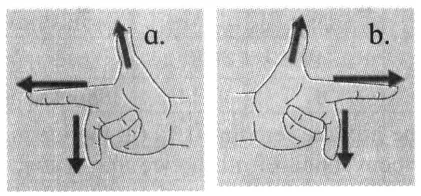
प्रश्न 3 (iv) आकृत्यांना नावे देऊन संकल्पना स्पष्ट करा :
(आकृती: हाताच्या दोन आकृत्या ‘अ’ व ‘आ’. प्रत्येकीत अंगठा, तर्जनी व मधले बोट परस्परांना लंब ताणलेले असून प्रत्येक बोटावर दिशा दाखवणारा बाण आहे; उरलेली दोन बोटे मुडपलेली आहेत. ‘अ’ मध्ये हाताचा तळवा समोर असून अंगठा वर, तर्जनी डावीकडे व मधले बोट खाली आहे. ‘आ’ ही ‘अ’ ची आरशातील प्रतिमा आहे: अंगठा वर, तर्जनी उजवीकडे व मधले बोट खाली.)
-
प्रश्न 3 (v) इंद्रधनुष्यनिर्मिती या नैसर्गिक सुंदर घटनेसंबंधी खालील प्रश्नांची उत्तरे द्या :
(a) इंद्रधनुष्यनिर्मितीची शास्त्रीयदृष्ट्या अचूक व नामनिर्देशित आकृती काढा.
(b) यात अंतर्भाव असणाऱ्या कोणत्याही दोन नैसर्गिक घटना सांगा.
(c) पाण्याचे अगदी लहान थेंब कशाप्रमाणे कार्य करतात ? -
प्रश्न 3 (vi) नावे लिहा :
(a) सुरीने सहज कापता येतील असे दोन धातू.
(b) काही धातूवर आघात केला की त्यांच्यापासून ध्वनी निर्माण होतो. त्या गुणधर्माचे नाव.
(c) विद्युतधारेचा सुवाहक असणारा अधातुयुक्त पदार्थ. -
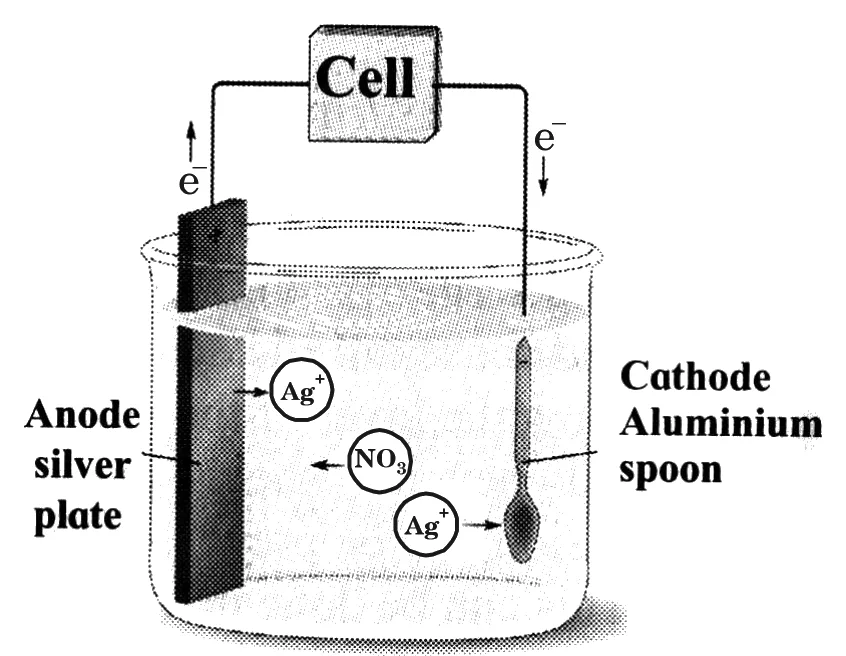
प्रश्न 3 (vii) खालील आकृतीचे निरीक्षण करून प्रश्नांची उत्तरे लिहा :
(आकृती: द्रावण असलेले बीकर. डावीकडे चांदीची पट्टी ‘चांदीचा धनाग्र’ आणि उजवीकडे ‘ऋणाग्र चमचा’ द्रावणात बुडवलेले असून दोन्ही वरच्या ‘विजेरी’ला तारेने जोडलेले आहेत. तारेत e– ची दिशा धनाग्राकडून विजेरीकडे आणि विजेरीकडून चमच्याकडे दाखवली आहे. द्रावणात Ag+ आयन धनाग्राकडून द्रावणात व चमच्याकडे जाताना आणि NO3– आयन धनाग्राकडे जाताना दाखवले आहेत.)
(a) वरील आकृतीवरून कोणत्या प्रक्रियेचा बोध होतो ?
(b) ही प्रक्रिया कशी घडते ?
(c) या प्रक्रियेचा वापर करून बनविलेल्या दोन वस्तू. -
प्रश्न 3 (viii) खालील सारणी पूर्ण करा :
उपग्रहाचा प्रकार उपग्रहाचे कार्य भारताच्या उपग्रहमालिकांची व प्रक्षेपकांची नावे (a) ......................... पृथ्वीवरील कुठल्याही ठिकाणाचे भौगोलिक स्थान निश्चित करणे. ......................... (b) हवामान उपग्रह ......................... ......................... (c) ......................... ......................... IRS
प्रक्षेपक : PSLV -
प्रश्न 4 (i) (a) मानवी डोळ्याची शास्त्रीयदृष्ट्या अचूक व नामनिर्देशित आकृती काढा.
(b) निरोगी मानवी डोळ्यासाठी सुस्पष्ट दृष्टीचे लघुत्तम अंतर किती आहे ?
(c) नाभीय अंतर आवश्यकतेनुसार बदल करण्याच्या नेत्रभिंगाच्या क्षमतेला काय म्हणतात ?
(d) कोणत्या दृष्टिदोषांमध्ये वयानुरूप भिंगाची नाभीय अंतर बदलण्याची क्षमता कमी होते ? -
प्रश्न 4 (ii) क्लोरीन या मूलद्रव्याचा अणुअंक 17 आहे. तर यावरून खालील प्रश्नांची उत्तरे लिहा :
(a) क्लोरीनचे इलेक्ट्रॉन संरूपण लिहा.
(b) क्लोरीन अणुच्या संयुजा कवचातील इलेक्ट्रॉन संख्या सांगा.
(c) क्लोरीनचे रेणूसूत्र सांगा.
(d) क्लोरीनचा रेणू निर्माण होताना कोणत्या प्रकारचा बंध निर्माण होतो ?
(e) क्लोरीन रेणूची इलेक्ट्रॉन-ठिपका संरचना (वर्तुळविरहित) रेखाटन करा.
Maharashtra SSC Science and Technology Part 1 Board Paper July 2025, Marathi Medium (विज्ञान आणि तंत्रज्ञान भाग १ जुलै 2025)
Full paper →-
प्रश्न 1 (अ)(i) अल्कधर्मी मृदा धातूंची संयुजा 2 आहे. म्हणजे त्यांची आधुनिक आवर्तसारणीतील जागा ................... मध्ये आहे.
-
प्रश्न 1 (अ)(ii) अणुवरील किंवा आयनावरील धनप्रभार जेव्हा वाढतो किंवा ऋणप्रभार कमी होतो तेव्हा त्याला ................... असे म्हणतात.
-
प्रश्न 1 (अ)(iii) ................... हे उपकरण विद्युतधारा निर्माण करण्यासाठी वापरतात.
-
प्रश्न 1 (अ)(iv) प्रकाश एका पारदर्शक माध्यमातून दुसऱ्या पारदर्शक माध्यमात जाताना त्याची मार्गक्रमणाची दिशा बदलते, यालाच प्रकाशाचे ................... असे म्हणतात.
-
प्रश्न 1 (अ)(v) भूपृष्ठापासून उच्च भ्रमणकक्षेची उंची ................... .
-
प्रश्न 1 (ब)(i) वेगळा घटक ओळखा :
वितळतार, विसंवाहक पदार्थ, रबरी मोजे, जनित्र -
प्रश्न 1 (ब)(ii) सहसंबंध पूर्ण करा :
तांबडा किरण तरंगलांबी जवळपास : 700 nm : : जांभळा किरण तरंगलांबी जवळपास : ............. -
प्रश्न 1 (ब)(iii) योग्य जोडी जुळवा :
स्तंभ ‘अ’ स्तंभ ‘ब’ दूरदृष्टिता (अ) दूरच्या वस्तू स्पष्ट दिसतात.
(ब) जवळच्या वस्तू स्पष्ट दिसतात.
(क) दूरच्या वस्तू स्पष्ट दिसत नाहीत. -
प्रश्न 1 (ब)(iv) इलेक्ट्रॉन संरूपण लिहा :
ॲल्युमिनिअम -
प्रश्न 1 (ब)(v) चूक की बरोबर ते लिहा :
चंद्रावरील मुक्तिवेग पृथ्वीवरील मुक्तिवेगापेक्षा कमी आहे. -
प्रश्न 2 (अ)(i) सोडिअम हा कायम रॉकेलमध्ये ठेवतात.
-
प्रश्न 2 (अ)(ii) डोळ्यापासून 25 cm पेक्षा कमी अंतरावर ठेवलेली वस्तू निरोगी डोळा स्पष्टपणे पाहू शकत नाही.
-
प्रश्न 2 (अ)(iii) विजेच्या बल्बमध्ये कुंतल बनविण्यासाठी टंगस्टन धातूचा उपयोग करतात.
-
प्रश्न 2 (ब)(i) जर एका ग्रहावर एक वस्तू 5 m वरून खाली येण्यास 5 सेकंद घेत असेल तर त्या ग्रहावरील गुरुत्व त्वरण किती ?
-
प्रश्न 2 (ब)(ii) एका मूलद्रव्याचे इलेक्ट्रॉन संरूपण 2, 8, 2 असे आहे. यावरून खालील प्रश्नांची उत्तरे लिहा :
(अ) या मूलद्रव्याचा अणुअंक किती ?
(आ) हे मूलद्रव्य कोणत्या आवर्तात आहे ? -
प्रश्न 2 (ब)(iii) खालील रासायनिक अभिक्रिया पूर्ण करा आणि उत्पादितांची नांवे लिहा :
\(\mathrm{CuSO_{4(aq)} + Fe_{(s)} \longrightarrow ......... + .........}\) -
प्रश्न 2 (ब)(iv) विशिष्ट उष्माधारकतेची व्याख्या लिहून त्याचे SI एकक व CGS एकक लिहा.
-
प्रश्न 2 (ब)(v) मिथेन \(\mathrm{(CH_4)}\) व इथेन \(\mathrm{(C_2H_6)}\) चे इलेक्ट्रॉन-ठिपका संरचना काढा.
-
प्रश्न 3 (i) ‘मुक्तिवेग’ ही संकल्पना स्पष्ट करा.
-
प्रश्न 3 (ii) आधुनिक आवर्तसारणीची खालील माहिती लिहा :
(अ) आधुनिक आवर्ती नियम लिहा.
(ब) आवर्तने व गण यांची संख्या लिहा.
(क) हॅलोजन गणातील मूलद्रव्यांची संयुजा लिहा. -
प्रश्न 3 (iii) खालील रासायनिक अभिक्रिया ऊष्माग्राही आहेत की ऊष्मादायी आहेत ते ओळखा :
(अ) \(\mathrm{HCl + NaOH \longrightarrow NaCl + H_2O}\) + उष्णता
(ब) \(\mathrm{2KClO_{3(s)} \xrightarrow{\Delta} 2KCl_{(s)} + 3O_2\uparrow}\)
(क) \(\mathrm{CaO + H_2O \longrightarrow Ca(OH)_2}\) + उष्णता -
प्रश्न 3 (iv) दिलेल्या आकृत्या अ, ब, क ओळखा व त्यांचे उपयोग लिहा :
(आकृती: (अ) दोन्ही टोकांना धातूची टोपणे असलेल्या काचेच्या नळीसारख्या दोन कार्ट्रिज वितळतारा (फ्यूज); (ब) वर व खाली जोडणीचे स्क्रू आणि मध्ये तीन खटके (लिव्हर) असलेले, एकमेकांना जोडलेले तीन पोलचे छोटे स्विचसारखे उपकरण (MCB); (क) काटा व वक्र मापपट्टी असलेले, पेटीत बसवलेले प्रयोगशाळेतील मीटर; त्याचा काटा मापपट्टीच्या मध्यभागी (शून्यावर) उभा आहे आणि खालच्या भागात जोडणीची टोके व एक बटण आहे.)
-
प्रश्न 3 (v) 5 kg वस्तुमान असलेल्या पाण्याचे तापमान 20°C पासून 100°C पर्यंत वाढविण्यासाठी किती उष्णता लागेल ?
[c = 1 kcal/kg°C] -
प्रश्न 3 (vi) भिंगासाठी वापरले जाणारे कार्टेशिअन चिन्ह संकेत लिहा.
-
प्रश्न 3 (vii) खालील तक्ता पूर्ण करा :
(आकृती: तीन ओळींत प्रत्येकी तीन चौकटी आडव्या रेषांनी जोडल्या आहेत. वरची ओळ: ‘IRNSS’ – [रिकामी] – [रिकामी]. मधली ओळ: [रिकामी] – ‘हवामान उपग्रह’ – [रिकामी]. खालची ओळ: [रिकामी] – [रिकामी] – ‘पृथ्वी निरीक्षण’. वरच्या ओळीची मधली चौकट, ‘हवामान उपग्रह’ ही मधली चौकट आणि खालच्या ओळीची मधली चौकट उभ्या रेषांनी जोडलेल्या आहेत.)
-
प्रश्न 3 (viii) खालील अभिक्रियांसाठी रासायनिक समीकरणे लिहा :
(अ) थर्मिट अभिक्रिया
(ब) मॅग्नेशिअम फितीचे हवेतील ज्वलन
(क) लोखंडाचा खिळा/चुरा कॉपर सल्फेटच्या जलीय द्रावणात टाकला. -
प्रश्न 4 (i) इंद्रधनुष्य हे प्रकाशाचे अपस्करण, अपवर्तन आणि आंतरिक परावर्तन ह्या तीनही नैसर्गिक घटनांचे एकत्रीकरण आहे. हे विधान आकृतीसह स्पष्ट करा.
-
प्रश्न 4 (ii) खालील सारणी पूर्ण करा :
अ. न. कार्बन अणुंची सरलशृंखला रेणुसूत्र नाव 1. C \(\mathrm{CH_4}\) ............ 2. C–C ............ ईथेन 3. C–C–C \(\mathrm{C_3H_8}\) ............ 4. C–C–C–C ............ ब्यूटेन 5. C–C–C–C–C \(\mathrm{C_5H_{12}}\) ............ 6. C–C–C–C–C–C ............ हेक्झेन 7. C–C–C–C–C–C–C ............ हेप्टेन 8. C–C–C–C–C–C–C–C \(\mathrm{C_8H_{18}}\) ............ 9. C–C–C–C–C–C–C–C–C ............ नोनेन 10. C–C–C–C–C–C–C–C–C–C ............ डीकेन
Maharashtra SSC Science and Technology Part 1 Board Paper July 2024
Full paper →-
Q.1 (A)(i) In modern periodic table the non-metals are found in ....................... .
-
Q.1 (A)(ii) \(\mathrm{CuSO_4(aq) + Zn(s) \rightarrow ZnSO_4(aq) + Cu(s)}\).
This is .................. type of chemical reaction. -
Q.1 (A)(iii) The unit of electric power is ................... .
-
Q.1 (A)(iv) We can see the sun even when it is little below the horizon because of ........................ .
-
Q.1 (A)(v) ................................... is one of the combustible component of L.P.G.
-
Q.1 (B)(i) Write the correlation :
Brass : Copper and Zinc : : Bronze : .................. -
Q.1 (B)(ii) Write True or False :
Benzene is an aromatic compound. -
Q.1 (B)(iii) Find the odd one out :
Myopia; Presbyopia; Hypermetropia; Retina -
Q.1 (B)(iv) What is angle of refraction when angle of incidence is 0º ?
-
Q.1 (B)(v) Name two appliances which work on the principle of magnetic effect of electric current.
-
Q.2 (A)(i) Give scientific reasons : Sodium is always kept in kerosene.
-
Q.2 (A)(ii) Give scientific reasons : A simple microscope is used for watch repairs.
-
Q.2 (A)(iii) Give scientific reasons : It is necessary to manage the space debris.
-
Q.2 (B)(i) The absolute refractive index of water is 1.33. What is the velocity of light in water ?
(Velocity of light in vacuum = 3 × 10⁸ m/s) -
Q.2 (B)(ii) Observe the figure and answer the questions given below.
(a) Name the phenomenon shown in the figure.
(b) Define the above phenomenon. -
Q.2 (B)(iii)
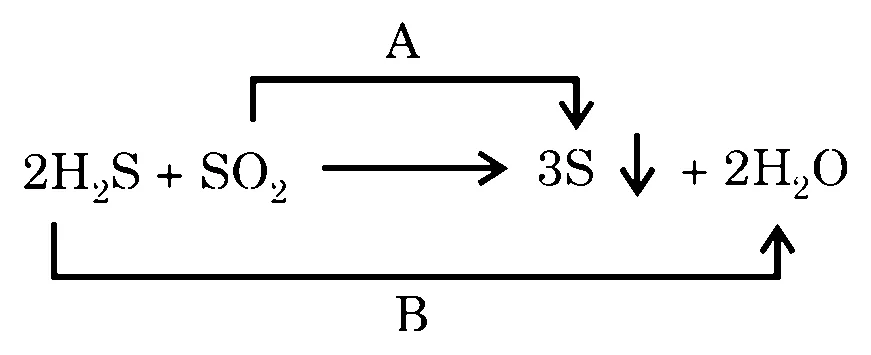
(a) Identify the above chemical reaction.
(b) Name the type of reaction in A and B. -
Q.2 (B)(iv) Rearrange the column 2 and 3 so as to match with the column 1.
Column 1 Column 2 Column 3 (1) Triad Concentrated mass and +ve charge Thomson (2) Octave Average of the atomic masses of first and third element Newlands Properties of the eighth element are similar to first Dobereiner -
Q.2 (B)(v) Define the following terms :
(a) Escape velocity
(b) Free fall. -
Q.3 (i) What information will you get from the given reaction ?
\[\mathrm{CaCO_{3(s)} \xrightarrow{\Delta} CaO_{(s)} + CO_{2}\uparrow}\]
-
Q.3 (ii) Observe the following ray diagram and answer the questions given below :
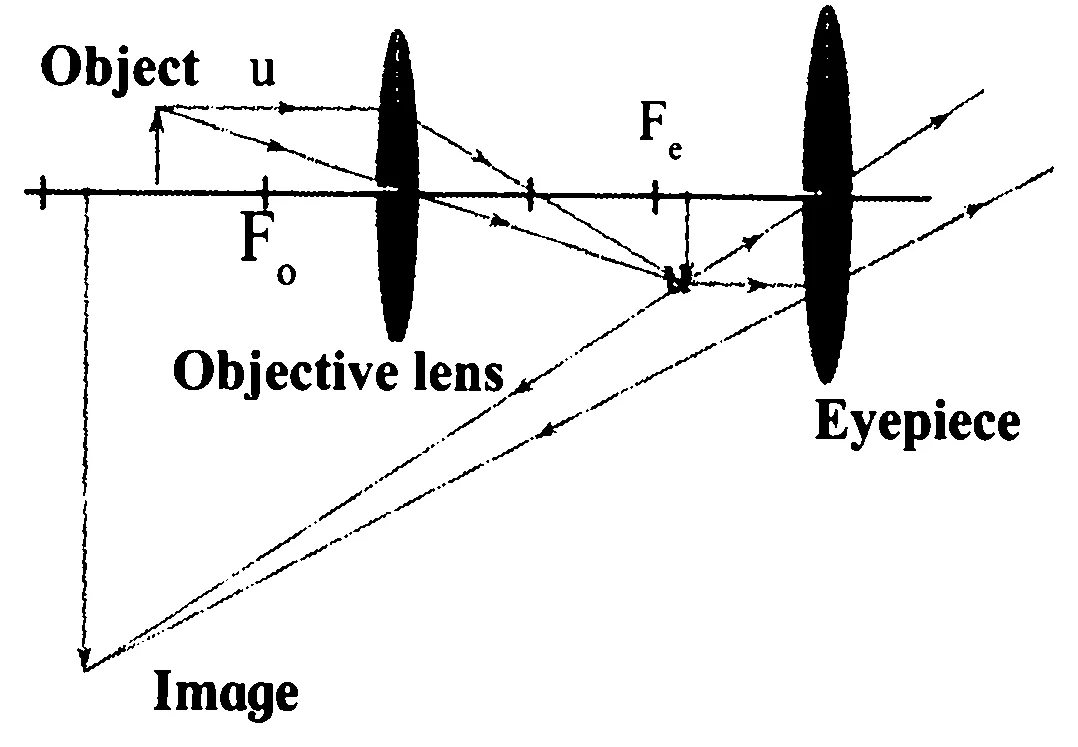
(a) Identify the instrument shown in the diagram.
(b) What is the combined effect of two lenses ?
(c) Write the use of the above instrument. -
Q.3 (iii) Read the following paragraph and answer the questions given below :
Rainbow is a beautiful natural phenomenon. It is the combined effect of dispersion, refraction and total internal reflection of light. It can be seen mainly after rainfall. Small droplets of water act as small prisms. When light rays from the sun enter these droplets it gets refracted and dispersed. Then there is internal reflection and after that once again the light gets refracted while coming out of the droplet. All these three processes together produce the rainbow.
(a) Which three major phenomena are responsible for rainbow formation ?
(b) How does refraction take place ?
(c) Draw a diagrammatic representation of rainbow production. -
Q.3 (iv) From the elements of second period of the modern periodic table given below, answer the following questions :
[The second-period elements are Li, Be, B, C, N, O, F and Ne.]
(a) Name the elements in which both the shells are completely filled with electrons.
(b) Name the element which has same number of electrons in both the shells.
(c) Which is the most electropositive element in this period ? -
Q.3 (v) Explain on which factor the value of acceleration due to gravity ‘g’ depends.
-
Q.3 (vi) Explain the following terms :
(a) Metallurgy
(b) Ores
(c) Gangue. -
Q.3 (vii) Give the names of the following satellite series developed by India :
(a) Satellite series actively working in the field of telecommunication, television and meteorological services.
(b) Satellite series specially working in the field of education.
(c) Satellite series to exactly locate position of any place on earth’s surface. -
Q.3 (viii) (a) What is meant by anomalous behaviour of water ?
(b) Explain the role of anomalous behaviour of water in preserving aquatic life in cold climate. -
Q.4 (i) Observe the following diagram and answer the questions given below :
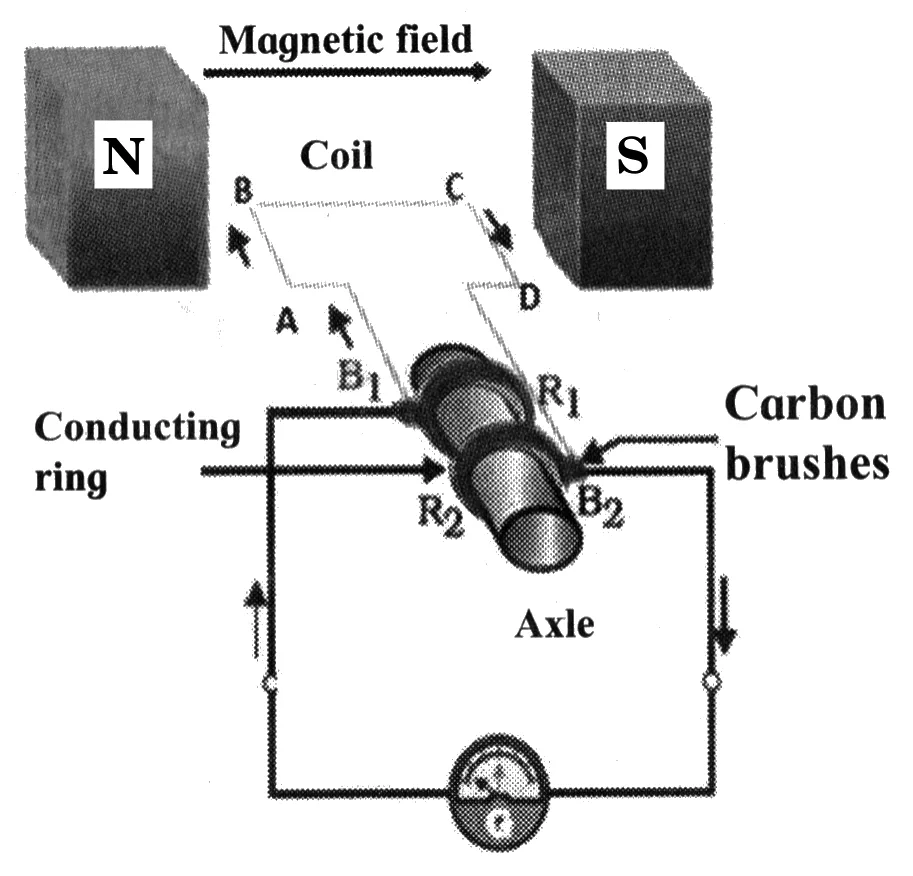
(a) Identify the above diagram. 1
(b) Write the principle on which the above appliance works ? 1
(c) Write the working of the above appliance. 2
(d) Write the use of the above appliance. 1 -
Q.4 (ii) Read the following paragraph and answer the questions given below :
Carbon compounds contain many elements. The element hydrogen is present to a smaller or larger extent in majority of carbon compounds. The compounds which contain carbon and hydrogen as the only two elements are called hydrocarbons. Hydrocarbons are the simplest and the fundamental organic compounds. The smallest hydrocarbon is methane (CH4), formed by combination of one carbon atom and four hydrogen atoms. We have already seen the structure of methane. Ethane is one more hydrocarbon. Its molecular formula is C2H6.
The carbon compounds having a double bond or triple bond between two carbon atoms are called unsaturated compounds. Ethene and ethyne are unsaturated hydrocarbons. The unsaturated hydrocarbons containing a carbon-carbon double bond are called ‘Alkenes’. The unsaturated hydrocarbons whose structures contain a carbon-carbon triple bond are called ‘Alkynes’. Generally the unsaturated compounds are more reactive than the saturated compounds.
(a) What is meant by hydrocarbon ? 1
(b) Name the smallest hydrocarbon. 1
(c) Define unsaturated compound. 1
(d) Differentiate between Alkene and Alkyne. 2
Maharashtra SSC Science and Technology Part 1 Board Paper March 2024
Full paper →-
Q.1 (A)(i) The SI unit of heat is ..................................
-
Q.1 (A)(ii) We can see the sun even when it is little below the horizon because of .........................................
-
Q.1 (A)(iii) .................... is the functional group of carboxylic acid.
-
Q.1 (A)(iv) In simple microscope .......................... lens is used.
-
Q.1 (A)(v) In ...................... process a layer of molten tin is deposited on metals.
-
Q.1 (B)(i) Write the name of the atom having the smallest size.
-
Q.1 (B)(ii) Write the molecular formula of calcium carbonate.
-
Q.1 (B)(iii) Write the use of ‘Calorimeter’.
-
Q.1 (B)(iv) Identify the hydrocarbon from the given electron-dot structure :
[Electron-dot structure: H : C : C : H with two H atoms above and two H atoms below the two carbon atoms; all the valence electrons of carbon are shared.]
-
Q.1 (B)(v) Match the Columns :
Column ‘A’ Column ‘B’ Refractive index of water (a) 1.31
(b) 1.36
(c) 1.33 -
Q.2 (A)(i) Give scientific reasons : When the gas formed on heating limestone, is passed through freshly prepared lime water, the lime water turns milky.
-
Q.2 (A)(ii) Give scientific reasons : Tungsten metal is used to make a solenoid type coil in an electric bulb.
-
Q.2 (A)(iii) Give scientific reasons : On exposure to air, silver articles turn blackish after some time.
-
Q.2 (B)(i) State Dobereiner’s law of triad. Give one example of it.
-
Q.2 (B)(ii) Identify the figure and explain its use :
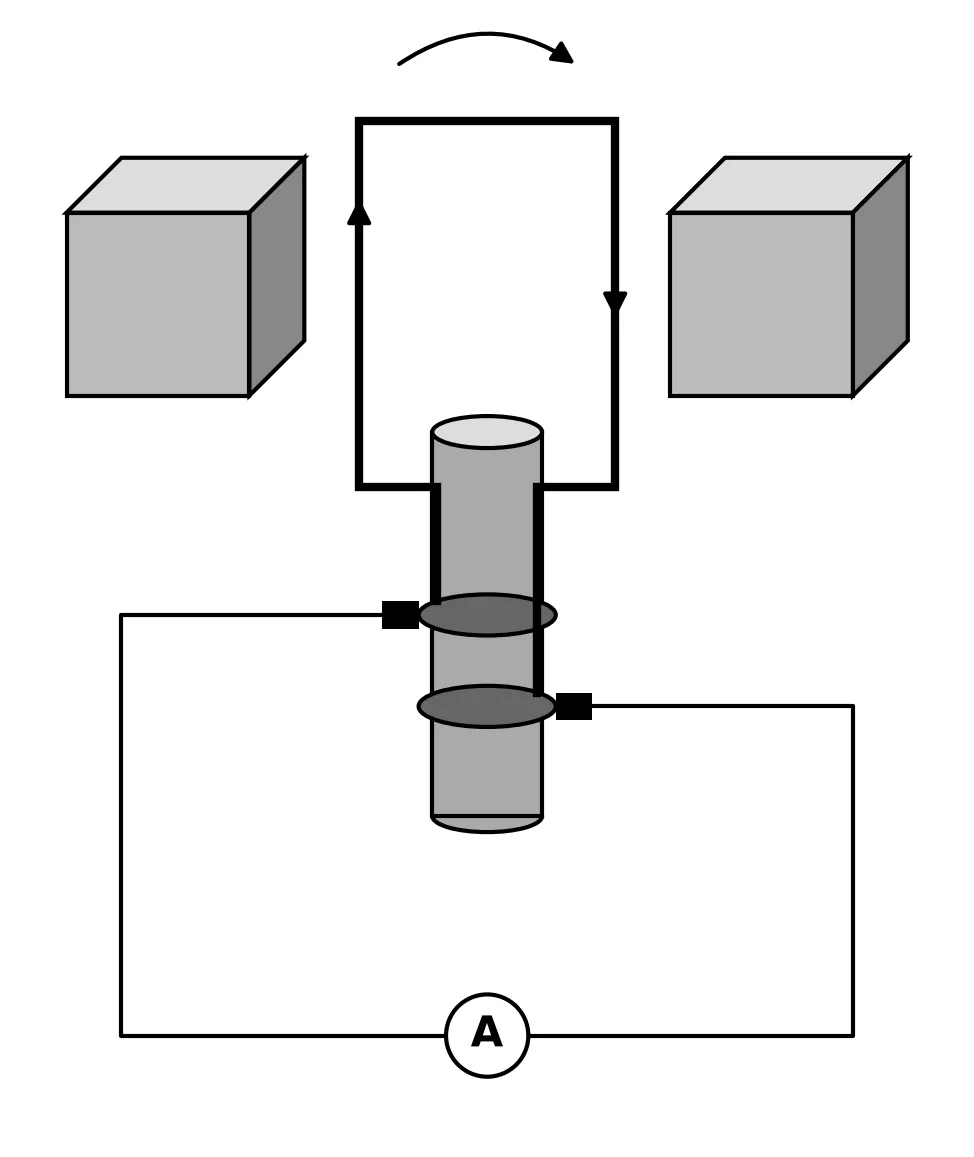
-
Q.2 (B)(iii) What is meant by satellite launch vehicle ? Name any one Indian satellite launch vehicle.
-
Q.2 (B)(iv) What is free fall ? When is it possible ?
-
Q.2 (B)(v) The focal length of a convex lens is 20 cm. What is its power ?
-
Q.3 (i) Select the appropriate options and complete the following paragraph :
(Metals, non-metals, metalloids, four, seven, s-block, p-block, d-block, f-block).
On the basis of electronic configuration, elements in the modern periodic table are classified into ...................... blocks. Groups 1 and 2 elements are included in ......................... and all these elements are metals. (except Hydrogen). Group 13 to 18 elements are included in ..................... . This block contains metals, non-metals and metalloids. Group 3 to 12 elements are included in ........................... and all the elements are ............................ elements shown at the bottom of the periodic table i.e. Lanthanides and Actinides constitute .................... and all these elements are metals.
-
Q.3 (ii) (a) What are the factors affecting the rate of chemical reaction ?
(b) Explain any one factor. -
Q.3 (iii) Observe the following graph and answer the following questions :
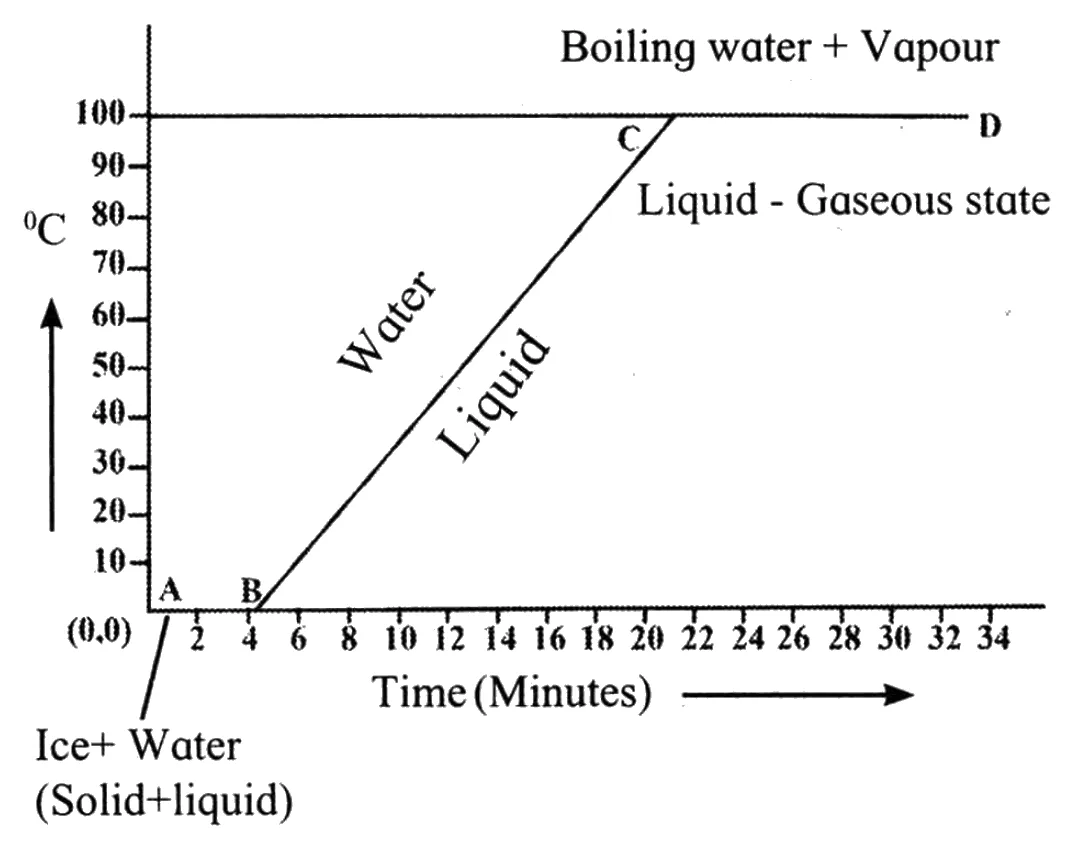
(a) What does the graph represent ?
(b) What does the line AB represent ?
(c) What does the line BC represent ? -
Q.3 (iv) Complete the following table by observing the given figures :
Points Figure 1 Figure 2 (a) Name of the defect .................. .................. (b) Position of the image .................. .................. (c) Lens used to correct the defect .................. .................. 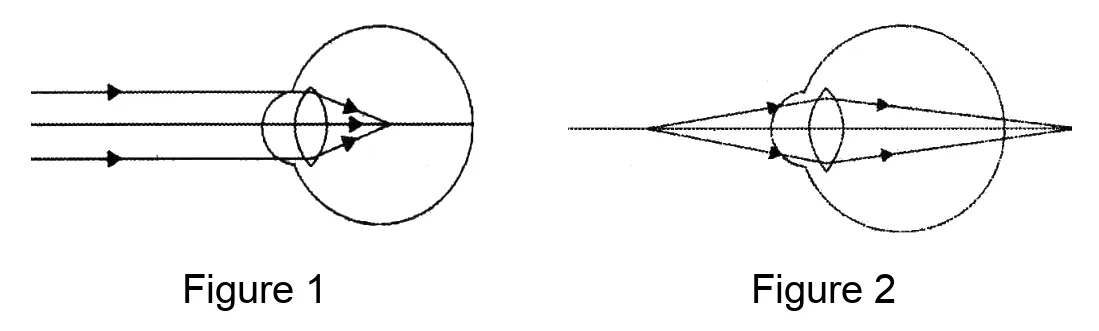
-
Q.3 (v) Write any three general properties of ionic compounds.
-
Q.3 (vi) Observe the figure and answer the questions :
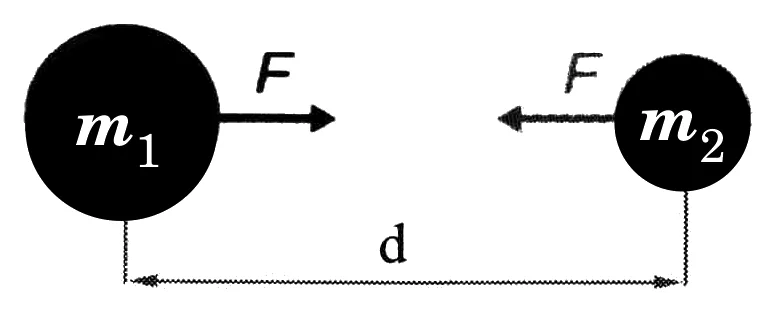
(a) State Newton’s universal law of gravitation.
(b) If the distance between the two bodies is tripled, how will the gravitational force between them change ?
(c) What will happen to gravitational force, if mass of one of the object is doubled ? -
Q.3 (vii) The orbit of a satellite is exactly 35780 km above the earth’s surface and its tangential velocity is 3.08 km/s.
How much time the satellite will take to complete one revolution around the earth ?
(Radius of earth = 6400 km.) -
Q.3 (viii) What is a solenoid ? Draw a neat diagram and name its various components.
-
Q.4 (i) Observe the given diagram and answer the questions :
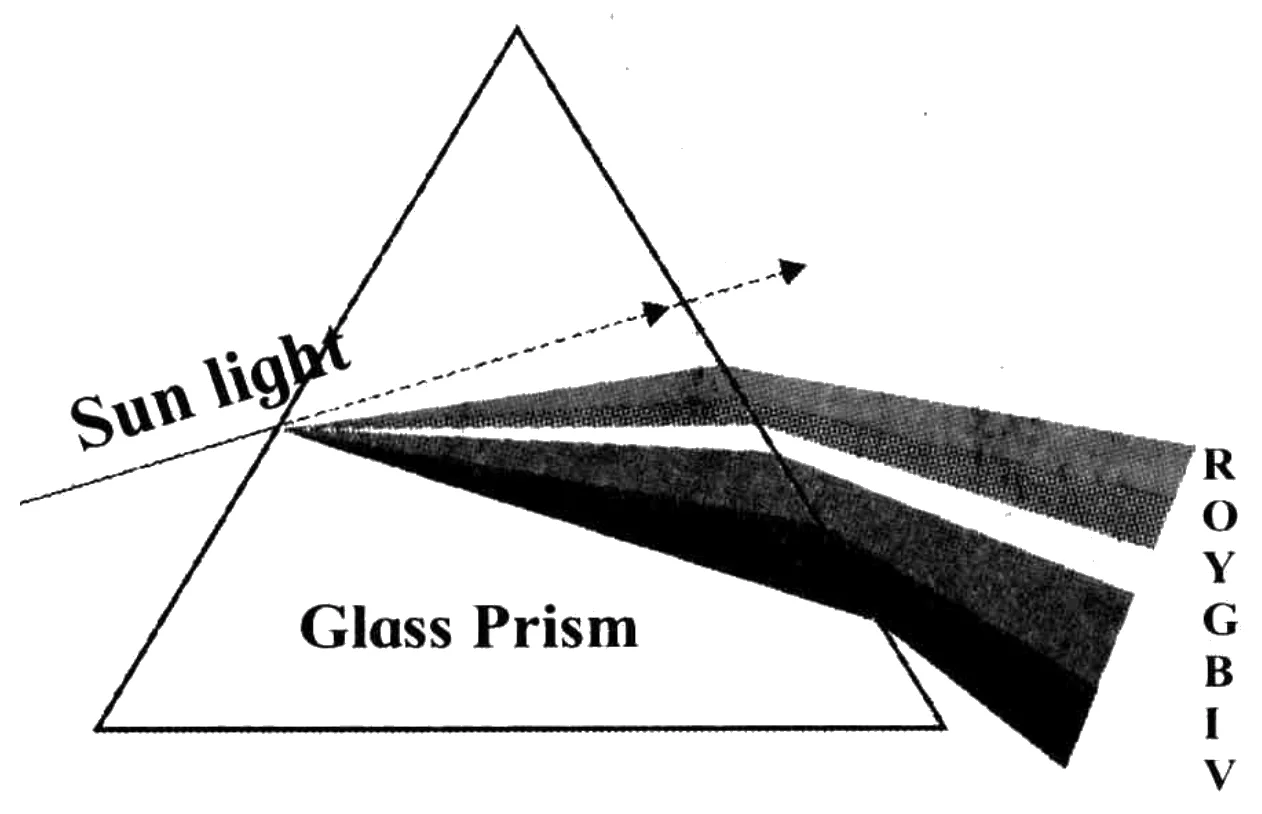
(a) Name the process shown in the figure.
(b) Name the colour that deviates the most.
(c) Name the colour that deviates the least.
(d) Name any one phenomenon in the nature which is based on the above process.
(e) Define ‘spectrum’. -
Q.4 (ii) Observe the diagram given below and answer the questions :
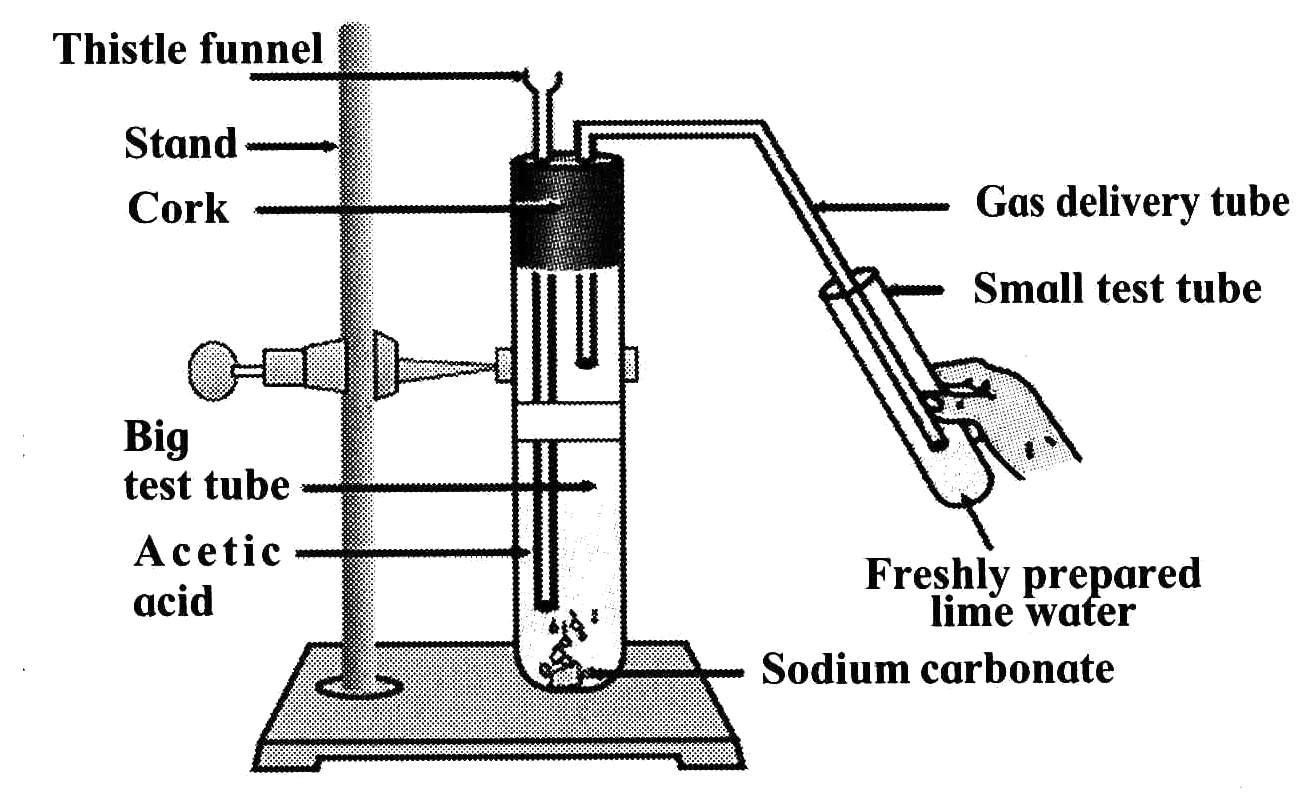
(a) Name the reactants in this reaction.
(b) Which gas comes out as effervescence in the bigger test tube ?
(c) What is the colour change in the lime water ?
(d) In the above experiment instead of sodium carbonate which chemical can be used to get same products ?
(e) Write the use of acetic acid.
Maharashtra SSC Science and Technology Part 1 Board Paper March 2024, Marathi Medium (विज्ञान आणि तंत्रज्ञान भाग १ मार्च 2024)
Full paper →-
प्रश्न 1 (अ)(i) उष्णतेचे SI पद्धतीतील एकक .................... हे आहे.
-
प्रश्न 1 (अ)(ii) सूर्य क्षितिजाच्या थोडा खाली असताना देखील आपल्याला दिसतो याचे कारण :
-
प्रश्न 1 (अ)(iii) .................... हा कार्बोक्झीलीक आम्लाचा क्रियात्मक गट आहे.
-
प्रश्न 1 (अ)(iv) साध्या सूक्ष्मदर्शीमध्ये .................... भिंगाचा वापर करतात.
-
प्रश्न 1 (अ)(v) .................... पद्धतीत वितळलेल्या कथिलाचा थर धातूवर चढविण्यात येतो.
-
प्रश्न 1 (ब)(i) सर्वात लहान आकाराच्या अणुचे नाव लिहा.
-
प्रश्न 1 (ब)(ii) कॅल्शिअम कार्बोनेटचे रेणूसूत्र लिहा.
-
प्रश्न 1 (ब)(iii) कॅलरीमापीचा उपयोग लिहा.
-
प्रश्न 1 (ब)(iv) दिलेल्या इलेक्ट्रॉन ठिपका संरचनेवरून हायड्रोकार्बन ओळखा :
(आकृती: H : C : C : H अशी ओळ; दोन्ही कार्बन अणूंच्या वर एकेक H व खाली एकेक H असून प्रत्येक H व C यांच्यामध्ये इलेक्ट्रॉनची एक जोडी (दोन ठिपके) दाखवली आहे.)
-
प्रश्न 1 (ब)(v) योग्य जोडी जुळवा :
‘अ’ स्तंभ ‘ब’ स्तंभ पाण्याचा अपवर्तनांक (a) 1.31
(b) 1.36
(c) 1.33 -
प्रश्न 2 (अ)(i) शास्त्रीय कारणे लिहा : चुनखडी तापवून मिळालेला वायू ताज्या चुन्याच्या निवळीतून जाऊ दिल्यास निवळी दुधाळ होते.
-
प्रश्न 2 (अ)(ii) शास्त्रीय कारणे लिहा : विजेच्या बल्बमध्ये कुंतल बनविण्यासाठी टंगस्टन धातूचा उपयोग करतात.
-
प्रश्न 2 (अ)(iii) शास्त्रीय कारणे लिहा : चांदीच्या वस्तू हवेत उघड्या ठेवल्या असता काळ्या पडतात.
-
प्रश्न 2 (ब)(i) डोबेरायनरचा त्रिकांचा नियम सांगून त्याचे एक उदाहरण लिहा.
-
प्रश्न 2 (ब)(ii) दिलेली आकृती ओळखून तिचा उपयोग लिहा :
(आकृती: दोन चुंबकीय ध्रुवांच्या (दोन ठोकळ्यांच्या) मध्ये एक आयताकृती कुंडल ठेवले आहे. कुंडलाची टोके खाली एका दंडगोलाकार आसाशी (अक्षाशी) जोडलेली असून तेथून बाह्य परिपथात गेली आहेत; या परिपथात ॲमीटर A जोडलेला आहे.)
-
प्रश्न 2 (ब)(iii) उपग्रह प्रक्षेपक म्हणजे काय ? कोणत्याही एका भारतीय उपग्रह प्रक्षेपकाचे नाव लिहा.
-
प्रश्न 2 (ब)(iv) मुक्त पतन म्हणजे काय ? ते केंव्हा शक्य होते ?
-
प्रश्न 2 (ब)(v) एका बहिर्गोल भिंगाचे नाभीय अंतर 20 cm आहे. तर त्या भिंगाची शक्ती किती असेल ?
-
प्रश्न 3 (i) कंसातील योग्य पर्याय निवडा व उतारा पूर्ण करा :
(धातू, अधातू, धातूसदृश मूलद्रव्ये, चार, सात, एस-खंड, पी-खंड, डी-खंड, एफ-खंड)
इलेक्ट्रॉन संरूपणाच्या आधारावर आधुनिक आवर्तसारणीतील मूलद्रव्यांचे वर्गीकरण .................... खंडात विभाजन केले आहे. गण 1 व 2 मधील मूलद्रव्यांचा समावेश .................... मध्ये आणि ते सर्व मूलद्रव्ये धातू आहेत. (हायड्रोजन वगळून) गण 13 ते 18 मधील मूलद्रव्यांचा समावेश .................... मध्ये आहे. या खंडामधे धातू, अधातू आणि धातूसदृश मूलद्रव्यांचा समावेश आहे. गण 3 ते 12 मधील मूलद्रव्यांचा समावेश .................... खंडामध्ये आहे. आणि ही सर्व मूलद्रव्ये .................... आहेत. आवर्तसारणीच्या तळाशी दाखवलेली लॅन्थेनाईड व ॲक्टेनाईड श्रेणीतील मूलद्रव्ये म्हणजे .................... खंड होय आणि ही सर्व मूलद्रव्ये धातू असतात.
-
प्रश्न 3 (ii) (a) रासायनिक अभिक्रियेच्या वेगावर परिणाम करणारे घटक कोणते आहेत ?
(b) त्यातील कोणत्याही एका घटकाचे स्पष्टीकरण द्या.